
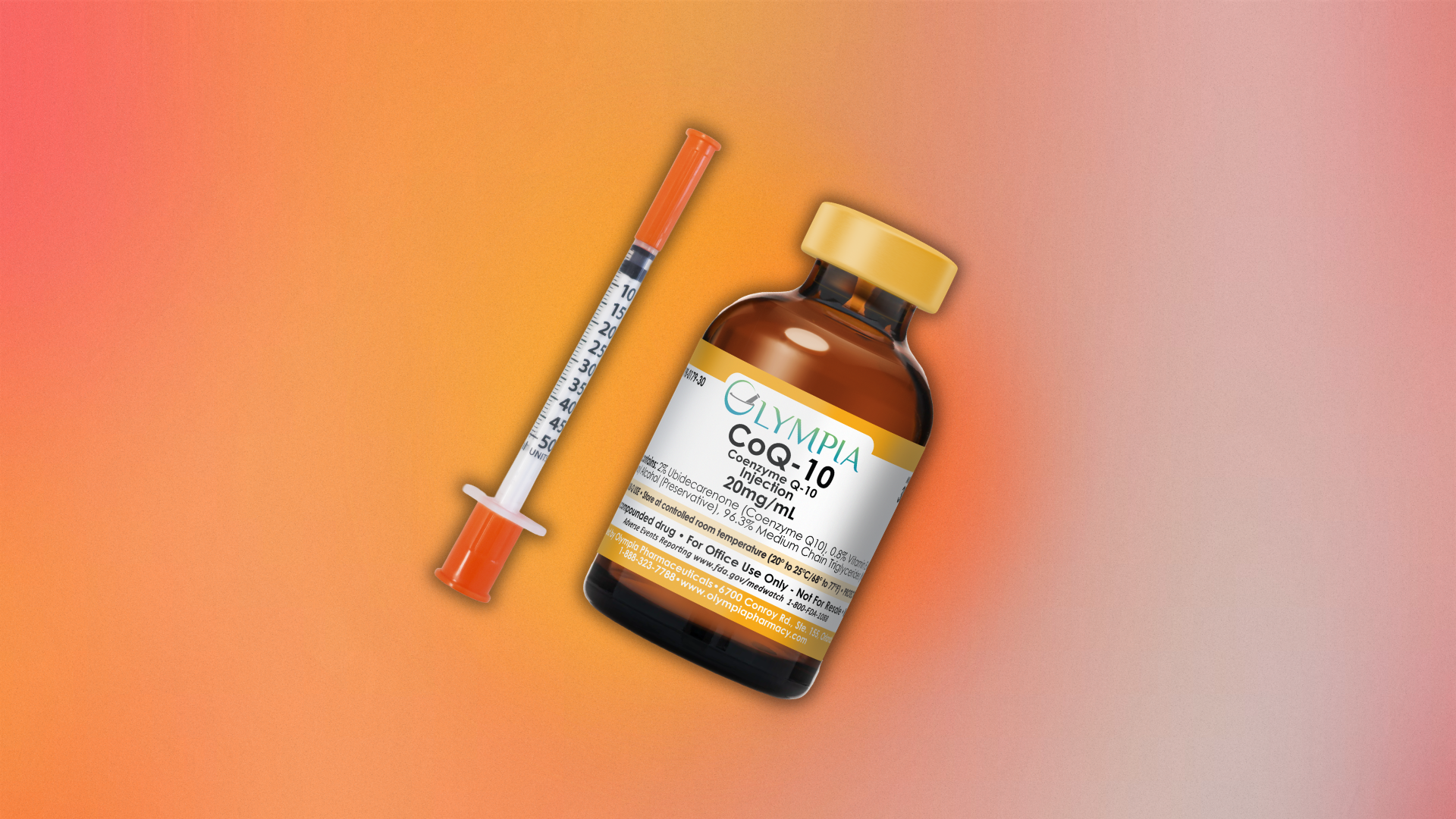
Coenzyme Q-10, also known as CoQ-10 or CoQ10, is a naturally occurring coenzyme and antioxidant involved in mitochondrial function and cellular energy production. Interest in CoQ10 injection protocols has grown as clinicians develop wellness, cardiovascular health, reproductive health, and healthy-aging programs for their patients.
Depending on a patient’s needs, Olympia’s compounded CoQ-10 injection may be prescribed for intramuscular (IM) or subcutaneous (SubQ) administration. Below, you’ll find a CoQ10 dosage chart and a straightforward explanation of dose, volume, frequency, and administration route.
Important: CoQ10 dosing is individualized and will vary based on patient needs. Use this chart as an educational overview and follow the plan created by your licensed healthcare professional. This chart and blog are for informational purposes only and are not intended to replace medical advice.
CoQ10 Dosage Chart
Concentration:
20 mg/mL
Vial volume:
30 mL
| Vía de administración | Dose | Volumen | Frecuencia | Notas |
| Inyección intramuscular | 20–50 mg | 1–2.5 mL (20mg-50mg) | 1-2 times a week | Administer intramuscularly according to clinical direction |
| SubQ injection | 20mg | 1mL | 1-2 times a week | Administer subcutaneously according to clinical direction |
Olympia’s CoQ-10 injection is formulated for IM or SubQ administration. It is not formulated for intravenous administration.
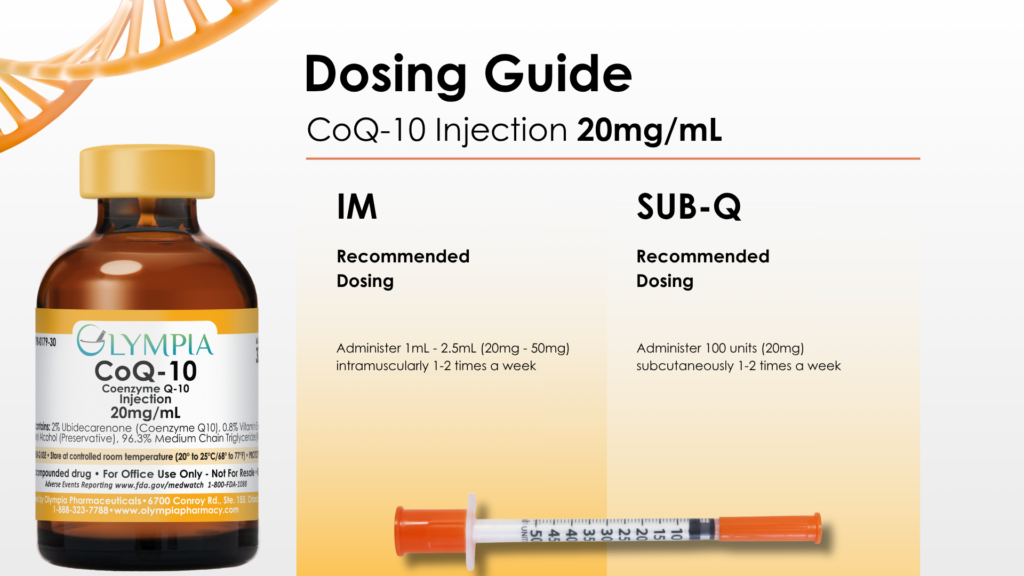
How to Read the Chart: mg, mL, and “Units”
Milligrams measure the amount of CoQ-10 being administered. Milliliters measure the volume of liquid needed to provide that dose.
Some syringes display volume using “units.” On a U-100 syringe:
- 100 units = 1 mL = 20 mg
- 150 units = 1.5 mL = 30 mg
- 200 units = 2 mL = 40 mg
- 250 units = 2.5 mL = 50 mg
However, standard U-100 insulin syringes commonly hold no more than 1 mL, or 100 units. Because this CoQ10 protocol may require more than 1 mL, milliliters and milligrams are clearer measurements than syringe units.
Do not divide a dose between syringes or select an injection device without guidance. Your healthcare provider should specify the correct syringe, needle, volume, and administration technique for your prescription.
Choosing a Route: IM vs. SubQ
Olympia’s CoQ-10 injection may be prescribed through either of the following routes:
Intramuscular injection: An IM injection delivers the medication into muscle tissue. Your healthcare provider will determine the appropriate injection site, needle, and technique based on the prescribed volume and your individual treatment plan.
Subcutaneous injection: A SubQ injection delivers medication into the fatty tissue beneath the skin. This route typically uses a different needle length and injection technique than an IM injection.
The same 20–50 mg dosing range may be used for either route under this protocol. Your clinician will consider your prescribed dose, injection volume, administration experience, and overall program when choosing between IM and SubQ administration.
Read Olympia’s guide on how to give a subcutaneous injection and how to give an IM injection for additional general information. Always follow the instructions provided specifically for your CoQ-10 prescription.
Storage and Handling Notes
Olympia’s CoQ-10 injection should be stored at a controlled room temperature and protected from light.
Always read the prescription label before administering an injection. Follow the storage instructions, beyond-use date, and handling directions printed on your vial. Do not refrigerate the medication unless your prescription label or healthcare provider specifically instructs you to do so.
Inspect the medication before use. Contact your healthcare provider or pharmacy if you notice an unexpected change in its appearance or have questions about its storage.
This information is for educational purposes only and is not intended to substitute for information from a medical provider. Compounded products are not evaluated by the FDA for safety, efficacy, or quality. Consult a medical provider before beginning any new form of care. Rx only.