
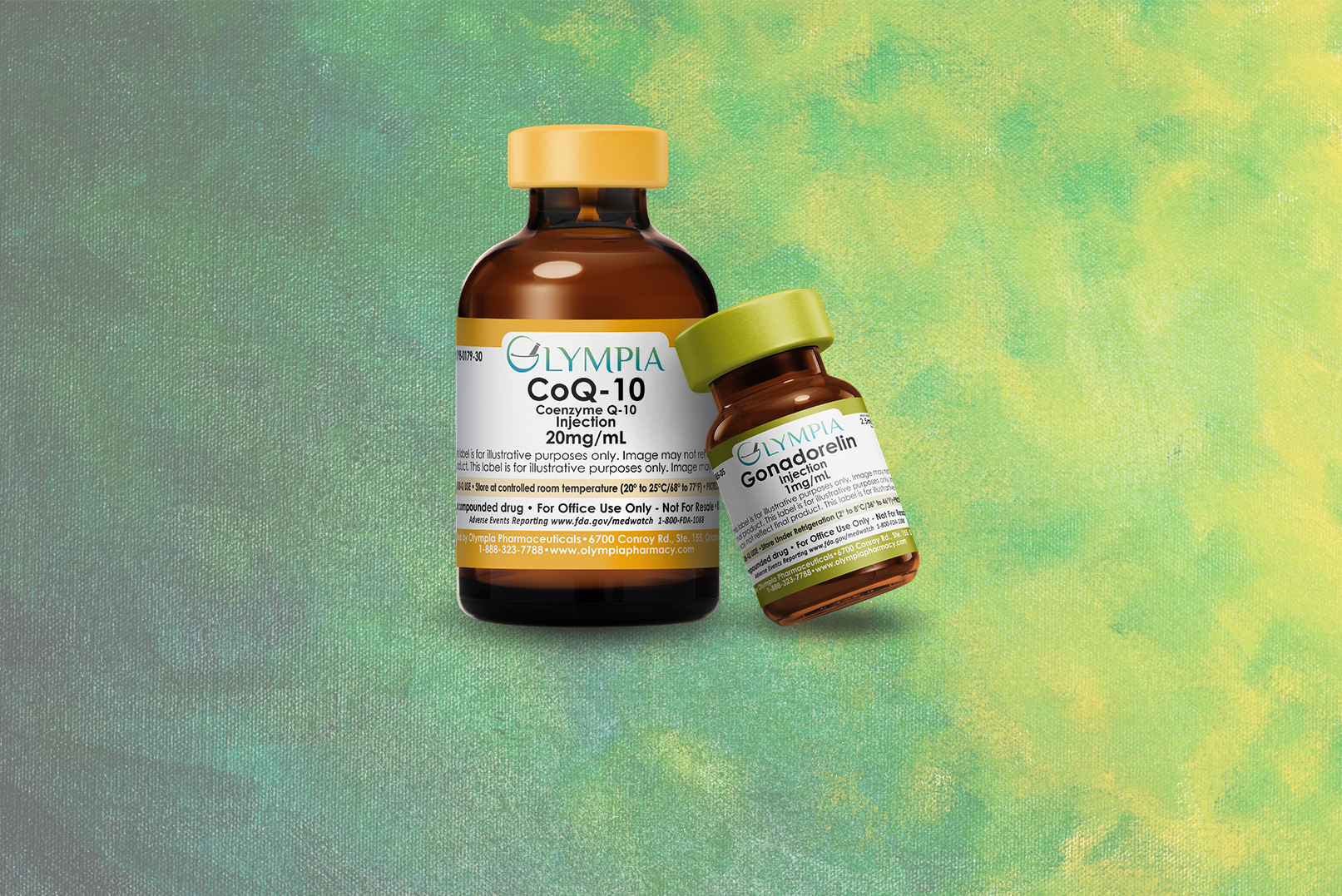
People exploring fertility care may come across gonadorelin and CoQ10. Although they are sometimes discussed together, they do very different jobs.
Gonadorelin works with the body’s hormone messaging system. CoQ10 is involved in how cells make energy. Both have been studied in fertility care, but the research applies to specific situations. Neither option is a one-size-fits-all answer.
What Is Gonadorelin?
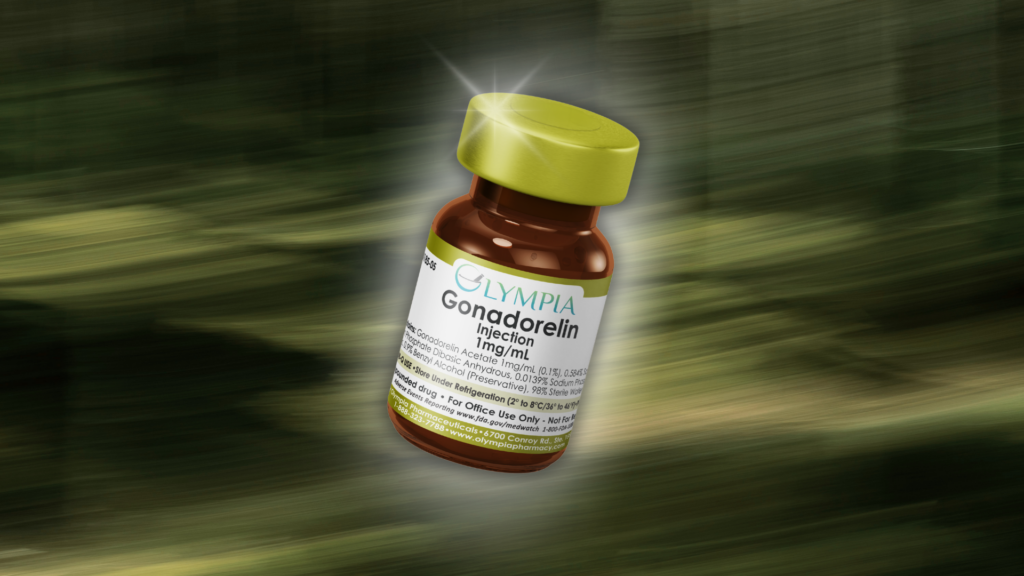
Gonadorelin is a lab-made version of a natural hormone called GnRH.
The brain normally releases GnRH in small bursts. These bursts tell the pituitary gland, a small gland below the brain, to release two other hormones called LH and FSH.
In women, LH and FSH help control egg development and ovulation. In men, they help control testosterone and sperm production.
One important distinction is that a pulsatile pump may also deliver gonadorelin subcutaneously, or under the skin. The clearer comparison is between small, repeated pulses and single or less frequent injections. Human studies have reported increases in LH and FSH after subcutaneous gonadorelin injections. Pulsatile subcutaneous schedules have also been studied for outcomes such as ovulation and sperm production.
Gonadorelin and Male Fertility
For men, gonadorelin is most relevant when the body is not sending enough GnRH.
One example is congenital hypogonadotropic hypogonadism, sometimes shortened to CHH. This is an uncommon hormone condition that can affect puberty, testosterone levels, and sperm production.
A 2024 review reported that about 75% to 80% of men with CHH began producing sperm after receiving pulsatile GnRH or another hormone-based regimen. These findings apply to men with this specific condition. They do not apply to every man with a low sperm count or trouble conceiving.
Male fertility concerns can have many causes. A healthcare provider may review hormone levels, medical history, medications, and semen analysis results before discussing gonadorelin.
Gonadorelin and Female Fertility
For women, gonadorelin may come up when the brain is not sending the hormone signals needed for regular ovulation.
One condition connected to this problem is functional hypothalamic amenorrhea. This means menstrual periods have stopped because brain-to-ovary hormone signals have slowed down. Low calorie intake, weight changes, intense exercise, stress, or a combination of these factors can play a part.
Healthcare providers first rule out pregnancy and other possible causes of missing periods. Nutrition, energy intake, exercise habits, and stress may also need to be addressed.
What Is CoQ10?
Coenzyme Q10, commonly called CoQ10, is a substance already found in the body. It is involved in how cells produce energy and is also sold as a dietary supplement.
Because sperm cells need energy to move, researchers have studied CoQ10 in male fertility. CoQ10 has also been studied in women going through in vitro fertilization, or IVF.
CoQ10 and Male Fertility
Some studies have reported changes in sperm movement after CoQ10 use.
A 2025 review looked at 50 controlled studies of supplements used by men with fertility concerns. CoQ10 was linked with better sperm movement. However, the review did not find convincing evidence that supplements increased pregnancy or live-birth rates. The researchers also rated much of the available evidence as low or very low in certainty.
This is an important difference. A change in a semen analysis does not necessarily mean that pregnancy is more likely.
CoQ10 and Female Fertility
Much of the research involving CoQ10 and female fertility has focused on women going through IVF who have a lower ovarian reserve. This means the ovaries are expected to produce fewer eggs during an IVF cycle.
A 2024 review included six studies and 1,529 women. The review reported more eggs retrieved, fewer canceled cycles, and higher pregnancy rates among women who received CoQ10 before IVF.
The studies had some limitations, including small study groups and differences in how they were conducted. Even so, the findings suggest that taking CoQ10 before IVF may support certain IVF outcomes, including the number of eggs retrieved and pregnancy rates. These results may not apply to every woman or to natural conception, and more research is needed to understand whether CoQ10 affects live birth rates.
Can Gonadorelin and CoQ10 Be Used Together?
Gonadorelin and CoQ10 focus on different parts of fertility:
- Gonadorelin is connected to hormone signals between the brain and reproductive organs.
- CoQ10 is connected to energy production inside cells.
The studies used for this article examined gonadorelin and CoQ10 separately. They do not establish that combining the two raises pregnancy or live-birth rates.
A healthcare provider may discuss both areas during a fertility evaluation, but each option should have a clear reason for being included.
Food for Thought
Gonadorelin and CoQ10 are connected to fertility in different ways.
Gonadorelin is mainly studied in people with specific hormone-signaling problems. CoQ10 research has focused on sperm movement and selected IVF outcomes in women with a lower ovarian reserve.
Neither option guarantees pregnancy. The current research also does not establish fertility outcomes for gonadorelin and CoQ10 used together.
A fertility evaluation can help determine whether hormones, sperm health, ovulation, ovarian reserve, anatomy, or a combination of factors may be involved.
Our pharmacists can answer questions about available compounded formulations and prescription fulfillment.
This article is for educational purposes and does not replace guidance from a licensed healthcare provider.
Fuentes
- Dwyer AA, McDonald IR, Quinton R. Review of fertility induction in men with congenital hypogonadotropic hypogonadism. 2024.
- Endocrine Society. Functional Hypothalamic Amenorrhea Guideline Resources.
- Michaelsen MP, et al. Systematic review of dietary supplements and male fertility outcomes. 2025.
- Lin G, et al. Review of CoQ10 use before IVF in women with diminished ovarian reserve. 2024.
- National Center for Complementary and Integrative Health. Coenzyme Q10.