
Interest in peptides has grown rapidly in anti-aging and hormone optimization circles. Walk into any longevity clinic today and you’ll hear names like sermorelin peptide, BPC-157, ipamorelin, and CJC-1295 tossed around as if they are interchangeable. They are not.
These compounds differ in how they work, what they target, how long they stay active in the body, and what evidence exists to support their use. Understanding those differences is the first step in having a meaningful conversation with your healthcare provider. This article is purely educational and does not constitute medical advice or make therapeutic claims about any product.
What Are Peptides?
Peptides are short chains of amino acids, the same building blocks that make up proteins. Your body already produces thousands of them naturally. Each one acts as a biological signal, telling tissues, glands, and organs what to do.
In the context of anti-aging and hormone optimization, the peptides that attract the most attention are those that interact with the growth hormone axis. Human growth hormone (HGH) plays a central role in body composition, metabolism, muscle mass, fat loss, and cellular repair. Growth hormone levels decline with age, which is why supporting the GH axis has become a focus for longevity-minded individuals.
Rather than injecting synthetic HGH directly, which bypasses the body’s own feedback systems, many clinicians now favor peptides that work with the pituitary gland to stimulate the body’s own growth hormone release. Sermorelin is the most established of these.
What Is the Sermorelin Peptide?
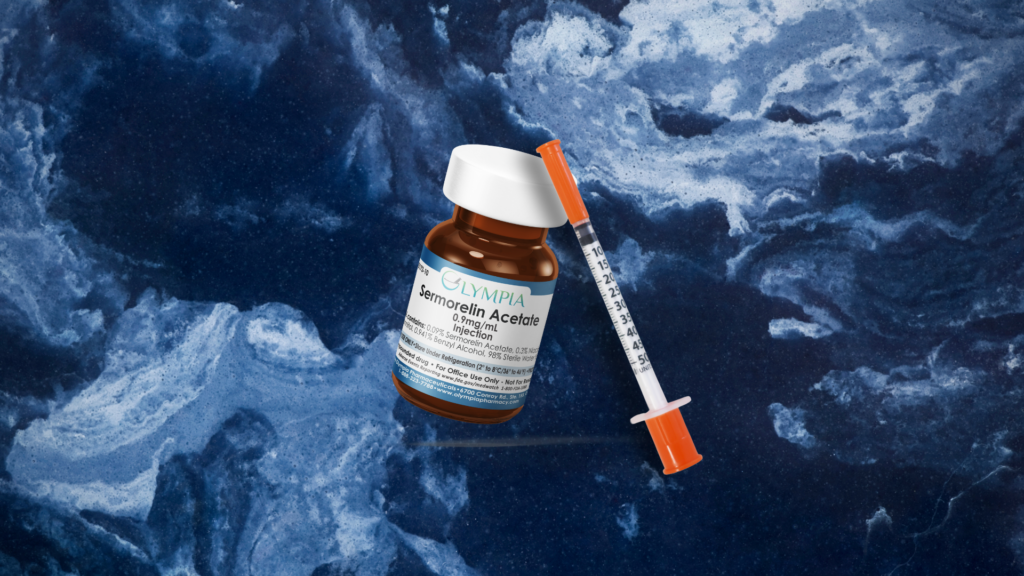
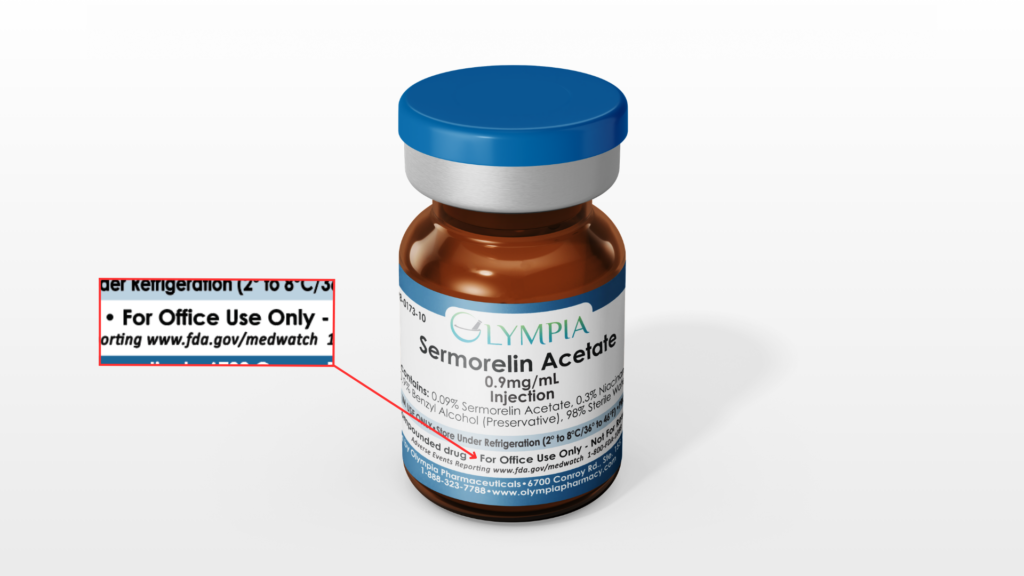
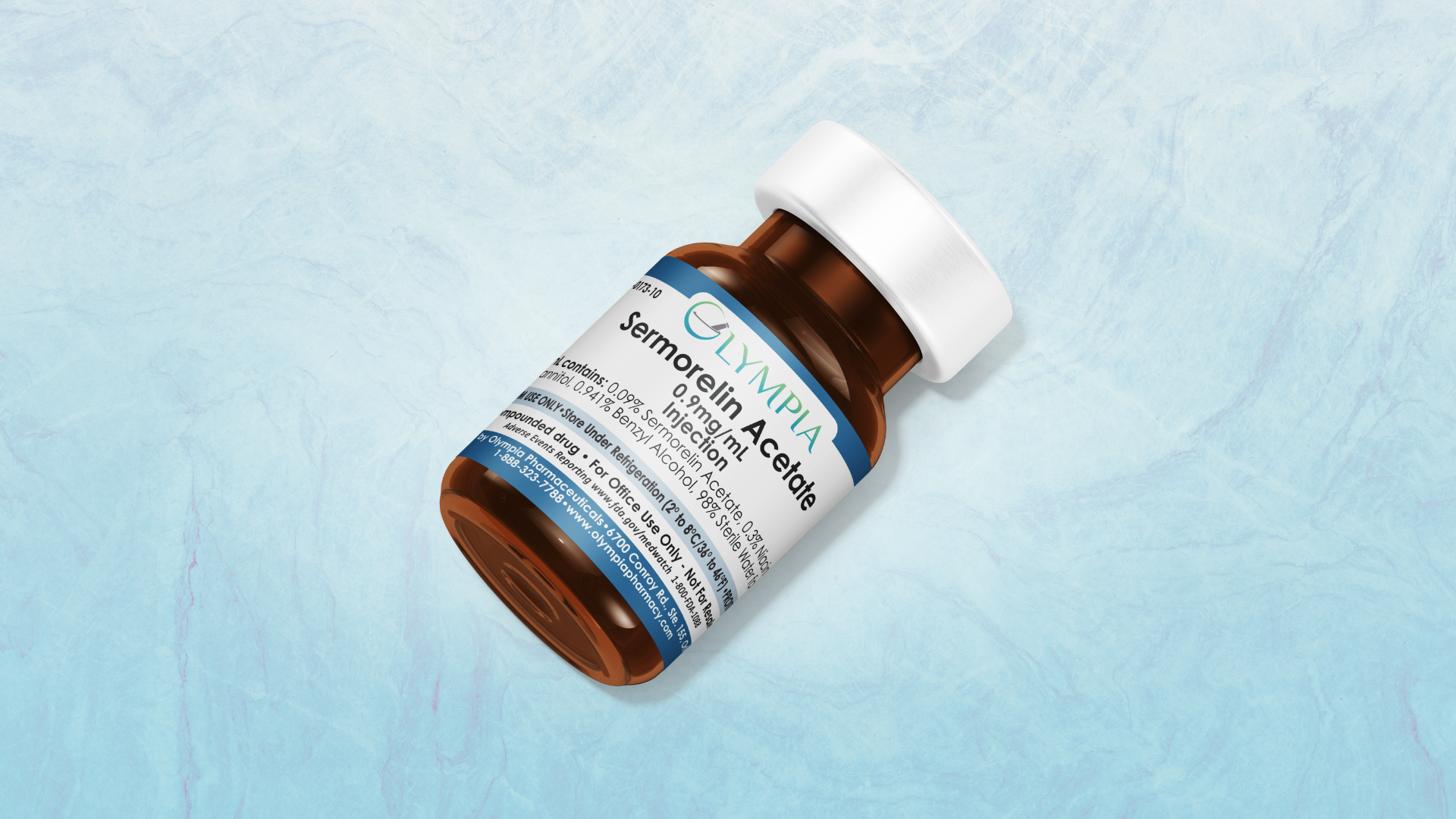
Sermorelin is a synthetic analogue of growth hormone–releasing hormone (GHRH). It consists of the first 29 amino acids of the naturally occurring GHRH molecule, the shortest sequence that retains full biological activity. Sermorelin binds to GHRH receptors on the pituitary gland and prompts a pulsatile release of growth hormone that closely mirrors the body’s natural rhythms.
Because sermorelin works upstream of the pituitary gland rather than delivering GH directly, the body’s own somatostatin feedback mechanism remains intact. This means the pituitary still regulates how much GH it releases, reducing the risk of the kind of above normal hormone levels that can occur with direct HGH injections.
Regulatory history: Sermorelin was FDA-approved in 1997 under the brand name Geref for the treatment of growth hormone deficiency in children. It was discontinued in 2008 for manufacturing reasons, not safety concerns. Today it is available only through licensed compounding pharmacies with a clinician’s prescription.
Sermorelin vs. CJC-1295 and Ipamorelin
CJC-1295 and ipamorelin are the two peptides most commonly compared or combined with sermorelin in hormone optimization protocols. They share the same ultimate goal,supporting GH output, but do so through different mechanisms and with different pharmacokinetic profiles.
CJC-1295: The Long-Acting GHRH Analogue
Like sermorelin, CJC-1295 is a GHRH analogue. However, it has been structurally modified to bind to albumin in the bloodstream, which dramatically extends its half-life to approximately six to eight days (with DAC formulation). This means injections are needed only once or twice a week rather than daily.
Ipamorelin: A Different Pathway Entirely
Ipamorelin is not a GHRH analogue. It is a growth hormone secretagogue that works by binding to the ghrelin receptor (GHS-R) in the pituitary gland and hypothalamus ,the same receptor targeted by the hunger hormone ghrelin. This produces short, acute pulses of GH release rather than a sustained elevation.
Ipamorelin stimulates GH release without meaningfully raising cortisol, prolactin, or acetylcholine. It is often used in protocols designed to support recovery and sleep.
Sermorelin vs. BPC-157: A Fundamentally Different Compound
BPC-157 (Body Protection Compound-157) is a synthetic pentadecapeptide derived from a protein found in human gastric juice. Its mechanism is completely different from any of the GH-axis peptides described above. Rather than stimulating hormone release, BPC-157 appears to work primarily through nitric oxide pathways, angiogenesis, and local tissue repair mechanisms.
In animal studies, BPC-157 has shown potential for accelerating tendon healing, reducing inflammation, supporting gut lining repair, and protecting organs.
From a regulatory standpoint, BPC-157 sits in a very different category than sermorelin. The FDA has confirmed there is no legal basis for compounding pharmacies to include BPC-157 in compounded medications. It is also banned by the World Anti-Doping Agency (WADA) under the S0 category of unapproved substances.
| Sermorelin peptide | BPC-157 | |
| Primary Focus | Systemic GH axis support | Local tissue repair & healing |
| Mechanism | GHRH analogue → pituitary stimulation | Nitric oxide, angiogenesis, anti-inflammation |
| Target | Whole-body (metabolic, body composition) | Localized injuries, gut, joints |
| FDA Status | Compounded (Rx only) | Not FDA-approved; no legal compounding basis |
| WADA Status | Prohibited in sport | Prohibited (S0 category) |
Key Considerations Before Exploring Peptide Therapy
For anyone researching peptides, a few points are worth keeping front of mind:
• Peptide therapy requires a clinician. None of the compounds discussed here should be used without medical supervision, a thorough health history review, and appropriate lab testing including growth hormone levels and IGF-1.
• Lifestyle factors matter. Results from any peptide protocol depend heavily on sleep, nutrition, exercise, and stress management. No peptide substitutes for foundational health habits.
• Human clinical data is limited for most peptides. Sermorelin has the longest history of clinical use among this group. Others, particularly BPC-157, have very limited human evidence.
• Source quality matters. Many of these peptides, not manufactured under standard pharmaceutical oversight, quality, purity, and sterility. Always use licensed, reputable facilities such as Olympia Pharmaceuticals
• Regulatory status varies. Sermorelin is legally available through compounding pharmacies with a prescription. BPC-157 does not have FDA approval for compounding for human use.
The Bottom Line
Sermorelin, CJC-1295, ipamorelin, and BPC-157 each represent distinct classes of compounds with different mechanisms, half-lives, targets, and evidence bases. Sermorelin’s defining feature is its close mimicry of the body’s natural GHRH signal and its preservation of the pituitary’s own feedback loops, making it one of the most physiologically straightforward options for individuals interested in hormone optimization.
BPC-157 occupies a separate category altogether: a tissue-targeted compound with intriguing preclinical findings but a much thinner human evidence base and a more complicated regulatory picture.
Whether any of these peptides is appropriate for you depends on your individual goals, your health history, your hormone levels, and the judgment of a licensed healthcare provider. This article is a starting point for education, not a guide to self-treatment. If you’re curious about what peptide therapy might look like for your situation, the best first step is a conversation with a knowledgeable clinician.
This content is for educational purposes only and is not a substitute for advice from a licensed medical provider. All compounded formulations are prepared by Olympia Pharmaceuticals under cGMP guidelines and with oversight by national and state pharmacy boards. Always consult with a medical professional before beginning any new regimen or care plan.