
Most people who take oral CoQ10 supplements know the common advice: take it in the morning with food. The logic is simple: CoQ10 plays a role in cellular energy production, and some people find that taking it later in the day interferes with their sleep. If you’ve ever taken a multivitamin or a B-complex and felt a little wired, that’s the same reasoning at work.
But that morning-versus-night rule was written for pills you swallow. It doesn’t necessarily apply the same way to an injectable formula like our compounded CoQ10 injection. When the medication goes directly into the muscle or fatty tissue, it bypasses the digestive system entirely, which changes how your body absorbs it, how quickly it shows up in your system, and potentially when you might feel its effects.
Whether you prefer taking it in the morning or as part of your evening routine, consistency is key. Try to take each injection around the same time of day – if mornings work best, stick with mornings. If evenings help you stay on track, keep it consistent in the evening.
How Injectable CoQ10 Is Different
Coenzyme Q10, also known as CoQ10, is a vital antioxidant involved in cellular energy production and healthy aging. When you take it as an oral supplement, your body has to break it down first, which can limit how much actually gets absorbed. That’s one reason many providers look at injectable options for patients who want more direct support. Drugs given by the intramuscular (IM) route are absorbed quickly through the bloodstream and bypass first-pass metabolism in the liver, unlike medications taken by mouth.
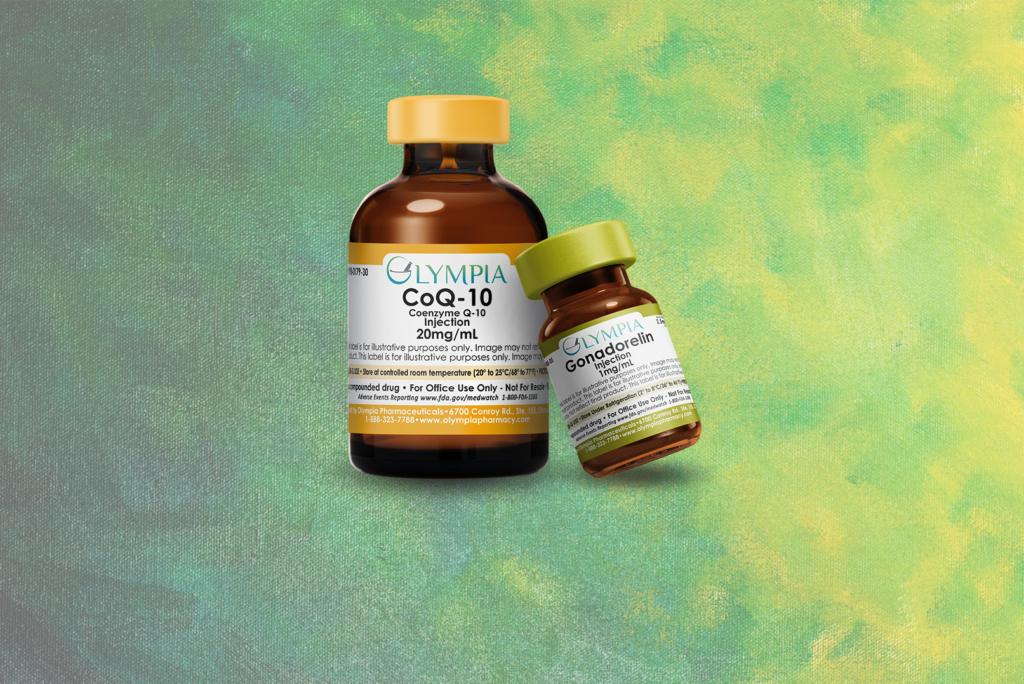
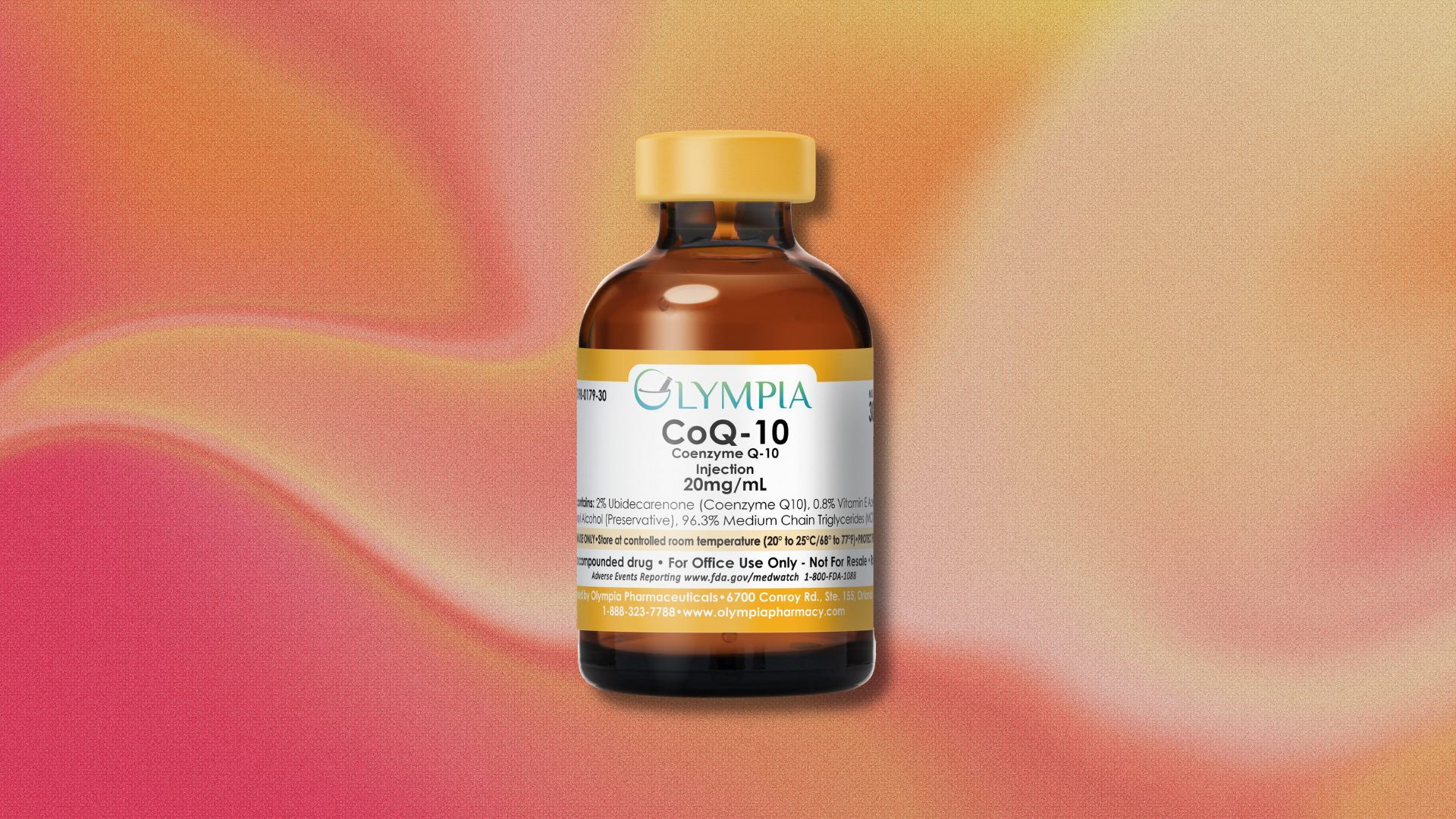
Olympia’s compounded CoQ-10 injection is formulated in an MCT (medium chain triglyceride) oil base. This oil base allows for easier injections, higher absorption, and less pain compared to some other formulations. Because it’s delivered via intramuscular or subcutaneous (SubQ) injection, the medication enters your system more directly than a pill would.
This means the “take it with food” or “don’t take it on an empty stomach” rules that apply to oral supplements are less relevant here. Absorption is more consistent, regardless of when you last ate.
Does the Time of Day Really Matter for Injections?
For oral CoQ10, the concern about sleep is real for some people. While CoQ10 isn’t a stimulant like caffeine, its role in supporting mitochondrial function and energy production can feel activating for sensitive individuals. If you take it at night and find yourself having trouble falling asleep, that’s a valid reason to switch to the morning.
With injectable CoQ10, the evidence is less clear. Because absorption is steadier and not tied to a meal spike, some people don’t notice the same “energy boost” sensation they might get from a high-dose oral supplement. Others may still feel a difference.
The bottom line is that there’s no single medical rule that says you must take injectable CoQ10 in the morning or at night. The best time is whatever helps you stay consistent. If you’re already giving yourself injections in the morning as part of a routine, stick with that. If evenings work better for your schedule, that’s likely fine too.
What to Watch For
Even though injectable CoQ10 is generally well tolerated, your body might react differently depending on when you take it. Here are a few things to keep in mind:
Sleep quality. If you notice that your injections are making it harder to fall asleep, try switching to the morning. This is a common reason people adjust their timing, even with injectable forms.
Injection site comfort. CoQ10 is suspended in an MCT oil base, which can sometimes feel slightly thicker than water-based solutions. Some people find that injecting in the morning allows them to move around more throughout the day, which can help disperse the oil and reduce soreness. Others prefer injecting at night and sleeping it off. See what feels best for you.
Consistency. The most important factor is taking it regularly. Whether that’s every morning with your coffee or just before bed, pick a time that fits your life and stick with it.
Precautions and Interactions
While CoQ10 is a naturally occurring substance in the body, it can still interact with certain medications. CoQ10 can interact with certain medicines, especially blood thinners, blood pressure drugs, and diabetes medicines, so it should only be used under medical supervision alongside these therapies. It’s important to talk to your provider before starting any new therapy, especially if you’re taking:
- Anticoagulants or blood thinners: CoQ10 may affect how these medications work.
- Antihypertensive agents: CoQ10 might lower blood pressure, which could interact with blood pressure medications.
- Antidiabetic medications: CoQ10 may affect blood sugar levels.
Avoid using CoQ10 if you have a known hypersensitivity or allergy to CoQ10 or any of its components. This information is for educational purposes only and isn’t intended to substitute or replace guidance from a medical provider. Compounded products are not evaluated by the FDA for safety, efficacy, or quality. Consult your medical provider before beginning any new form of care. Rx Only.
Finding Your Rhythm
There’s no perfect answer to when to take CoQ10. For oral supplements, many people choose the morning to avoid sleep disturbances. For injectable CoQ10, the timing is more flexible, the best time is the one that helps you stay consistent with your regimen.
If you’re unsure, start with the morning and see how you feel. If you notice any changes in your sleep or energy levels, adjust accordingly. Your provider can help you determine the best schedule for your specific needs and goals.
This content is for educational purposes only and is not a substitute for advice from a licensed medical provider. All compounded formulations are prepared by Olympia Pharmaceuticals under cGMP guidelines and with oversight by national and state pharmacy boards. Always consult with a medical professional before beginning any new regimen or care plan.
Fuentes: