Paquete de NAD+ y Sermorelina (Inyectable)
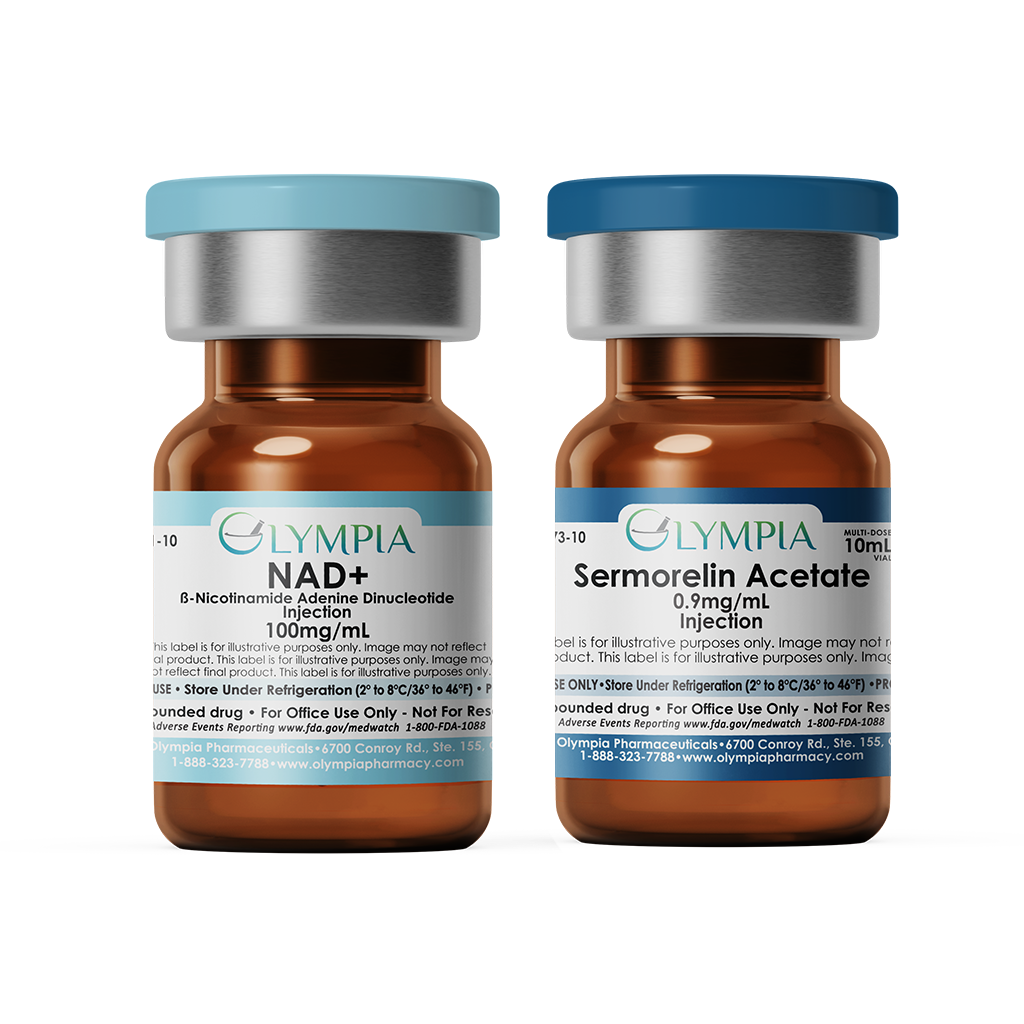
The NAD+ & Sermorelin Bundle pairs two compounded injectables that work through different pathways: NAD+, a coenzyme involved in cellular energy metabolism, and Sermorelin Acetate, a peptide that signals the pituitary gland to release growth hormone. Both are available by prescription only.
Includes:
- NAD+ Injection, 100mg/mL, 10mL
- Sermorelin Acetate Injection, 0.9 mg/mL, 10mL

Bundle Overview
Some prescribers include both NAD+ and sermorelin in a patient’s protocol. This bundle supplies both compounded injectables from Olympia together, so clinics and patients can order them in one place. Whether either medication or the combination is appropriate, is decided by a licensed healthcare provider.
Sermorelin vs. NAD+: How They Differ
NAD+ and sermorelin are often mentioned together, but they are very different compounds.
| Sermorelin Acetate | NAD+ | |
| What it is | Synthetic peptide analog of growth hormone-releasing hormone (GHRH) | Coenzyme found in every cell in the body |
| How it works | Binds GHRH receptors on the pituitary gland, prompting the body to release its own growth hormone | Takes part in the chemical reactions cells use to produce energy, and is used by enzymes involved in DNA maintenance |
| Target | Pituitary signaling (hormonal pathway) | Cellular metabolism (cellular pathway) |
| Route | SubQ or IM | IV/IM/SubQ |
Learn more about each on its own product page: Sermorelin Acetate 0.9 mg/mL Injection and NAD+ Injections.
Why Are NAD+ and Sermorelin Offered Together?
Because the two act on separate pathways, some prescribers include both in the same patient protocol. Offering them as a bundle makes it simpler to order both. For more on how prescribers approach sermorelin and NAD+ within a supervised fitness and recovery plan, see stacking NAD+ with sermorelin.
Dosage, Concentration, Route of Administration
Dosage: Seek advice from a licensed physician, medical director, or other healthcare provider. Follow the label that comes with your bundle.
Concentrations: NAD+ 100mg/mL; Sermorelin Acetate 0.9 mg/mL
Route of administration: NAD+ IV/IM/SubQ, Sermorelin Acetate IM/SubQ
For general reference on standalone Sermorelin Acetate 0.9 mg/mL, see our Sermorelin Dosage Chart. Your bundle prescription may differ, so always follow your own label.
Precautions/Side Effects
Like any medication, these injections may cause side effects, including pain, redness, or swelling at the injection site. NAD+ injections may also cause temporary discomfort, flushing, or nausea. Not everyone is a good candidate for these medications; patients with an underactive thyroid should consult their provider before using sermorelin. Always tell your healthcare provider about every medication and supplement you take. Seek urgent medical care if you think you are having a serious allergic reaction.
Storage
Store both NAD+ and sermorelin acetate injections under controlled refrigeration. Protect from light. Always follow the storage instructions on your label.
NAD+ and Sermorelin FAQs
What’s the difference between sermorelin and NAD+?
Sermorelin is a peptide that signals the pituitary gland to release growth hormone. NAD+ is a coenzyme involved in cellular energy metabolism. They work through separate pathways.
Can NAD+ and sermorelin be used together?
Some prescribers include both in the same protocol, which is why this bundle exists. Whether the combination is right for you depends on your health history and goals, and only your provider can decide that.
Is the dosing the same as standalone sermorelin?
Do These Injections Require a Prescription? Are They FDA-Approved?
NAD+ and Sermorelin injections require a prescription. Like all compounded medications, they are not FDA-approved, meaning they have not gone through the FDA’s drug approval process for any specific condition. Because of this, insurance typically does not cover them.
Quality instead depends on the compounding pharmacy you source it from. Olympia prepares both Sermorelin and NAD+ injections under state board of pharmacy oversight and at federal cGMP standards. Your prescribing provider will also monitor your regimen and adjust your plan as needed.
Resources:
- Tutorial: How to Give a Subcutaneous Injection
- Tutorial: How to Open Your Medication Vial
- Sermorelin vs. Other Peptides
Get started with NAD+ & Sermorelin Bundle (Injectable) today.