
Managing patients with cosmetic vein concerns requires a balance of clinical precision, patient education, and procedural comfort. Whether you’re addressing telangiectasias with sclerotherapy or targeting larger varicose veins with laser ablation, the success of the procedure depends not only on the technique but also on the support products used during and after treatment.
At Olympia Pharmaceuticals, we understand that providers need reliable, high-quality compounded solutions to support their clinical workflows. From local anesthesia to sclerosing agents and post-procedure comfort, our product line is designed to help you deliver viable, comfortable care.
This guide outlines the current clinical standards for cosmetic vein care, highlights where our products fit into your protocols, and provides guidance on managing patient expectations and outcomes.
The Clinical Foundation: Understanding Venous Insufficiency
Before initiating any form of care, it’s crucial to accurately diagnose the underlying venous pathology. The CEAP classification system (Clinical-Etiologic-Anatomic-Pathophysiologic) classification system remains the standard framework for categorizing chronic venous disorders and assessing disease severity. Identifying whether a patient presents with C1 telangiectasias and reticular veins, C2 varicose veins, or more advanced C3–C6 chronic venous insufficiency helps guide treatment planning, determine medical necessity and establish realistic patient expectations.
For patients seeking cosmetic improvement for spider veins (telangiectasias) and reticular veins, sclerotherapy is the first-line therapy according to the 2023 SVS/AVF/AVLS guidelines. In patients with symptomatic varicose veins associated with axial reflux of the great or small saphenous veins, endovenous ablation techniques—including radiofrequency ablation (RFA) and endovenous thermal ablation (EVLA)—are often recommended over surgical ligation and stripping. Treatment selection should also account for individual patient factors, including vein size and anatomy, reflux pattern, symptom severity, skin changes, comorbid conditions, and overall treatment goals.
Sclerotherapy: Technique and Product Support
Sclerotherapy is a minimally invasive procedure that involves the injection of a sclerosing agent directly into a target vein, causing endothelial injury, vessel wall inflammation, and eventual fibrosis and closure of the treated vessel. Over time, the vein is reabsorbed by the body and blood flow is redirected to healthier veins. Sclerotherapy is considered the treatment of choice for spider veins (telangiectasias) and reticular veins and may also be used for selected varicose veins. The procedure can be performed using liquid or foam sclerosants, with foam formulations often preferred for larger veins due to improved contact with the vein wall and reduced dilution by blood. Treatment selection depends on vein size, anatomy, provider experience, and patient-specific factors.
Small Vein Support with Glycerin Injection
For very fine telangiectasias (typically less than 1 mm in diameter), glycerin injection may be a useful treatment option. As a hyperosmotic sclerosant, glycerin dehydrates endothelial cells, resulting in endothelial injury, vein closure, and eventual reabsorption of the treated vessel. Olympia Pharmaceuticals offers Glycerin Injection as an option for providers treating small visible veins. Glycerin-based sclerotherapy is often selected for cosmetic treatment of fine telangiectasias due to its established use in small superficial vessels.
Standard Sclerotherapy with Sodium Tetradecyl Sulfate
For reticular veins and selected small varicose veins, sodium tetradecyl sulfate (STS) remains one of the most widely utilized sclerosants in vein care. As a detergent sclerosant, STS damages the endothelial lining of the vein, leading to thrombosis, fibrosis, and eventual vessel closure. Olympia Pharmaceuticals offers Sodium Tetradecyl Sulfate 1.5% Injection, providing providers with a treatment option that can be selected based on vein size, anatomy, and individual patient needs.
Telangiectasias (Spider Veins, <1 mm)
For very small telangiectasias, glycerin-based sclerosants are frequently utilized due to their established use in cosmetic vein treatment. Glycerin functions as a hyperosmotic agent, causing endothelial dehydration and subsequent vein closure. These vessels often require multiple treatment sessions to achieve optimal cosmetic improvement, with most patients requiring 1–3 sessions depending on vein burden and individual response.
Reticular Veins (1–3 mm)
For reticular veins, detergent sclerosants such as sodium tetradecyl sulfate (STS) is commonly selected. Both agents induce endothelial injury, thrombosis, fibrosis, and eventual vessel obliteration. Product concentration and treatment approach are typically determined by the treating provider based on vessel size, location, and patient characteristics. Most patients require approximately 1–3 treatment sessions, although additional sessions may be necessary for extensive disease.
Small Varicose Veins (>3 mm)
For larger superficial varicosities, foam sclerotherapy utilizing STS may be considered, particularly when treating tributary veins or residual varicosities following treatment of underlying venous reflux. Ultrasound guidance may be utilized when clinically appropriate. The number of treatment sessions varies considerably based on disease severity and the presence of underlying venous insufficiency.
Injection Technique Considerations
Sclerosants are generally administered by direct intraluminal injection into the target vein. The specific injection technique, including the use of liquid versus foam sclerosants and ultrasound guidance, is determined by the treating provider based on vessel anatomy, treatment goals, and clinical judgment. Appropriate vein visualization, confirmation of intravascular placement, and avoidance of extravasation are essential to optimize outcomes and minimize complications.
Expected Treatment Course
The total number of sessions required varies according to vein size, extent of disease, underlying venous reflux, and patient expectations. Cosmetic treatment of spider and reticular veins commonly requires 1–3 sessions, while patients with more extensive venous disease may require additional treatment sessions and evaluation for underlying axial reflux prior to cosmetic treatment.
Patient Comfort and Procedural Support
Sclerotherapy is generally well tolerated, some patients may experience discomfort during treatment, particularly when multiple injection sites are required or when more extensive venous procedures are performed. Depending on the procedure and patient needs, local anesthetics may be utilized to support procedural comfort.
- Inyección de Lidocaína al 1%:
- Commonly used local anesthetic for infiltration and procedural numbing
- Provides temporary local anesthesia to improve comfort.
- Inyección de Lidocaína al 2%:
- A higher-concentration option for procedures requiring greater anesthetic effect or provider-directed infiltration protocol.
- Inyección de Lidocaína al 1% / Epinefrina 1:100,000/mL:
- A combination anesthetic that works to constrict blood vessels and prolong numbness
- May help reduce local bleeding and improve visualization during certain procedures
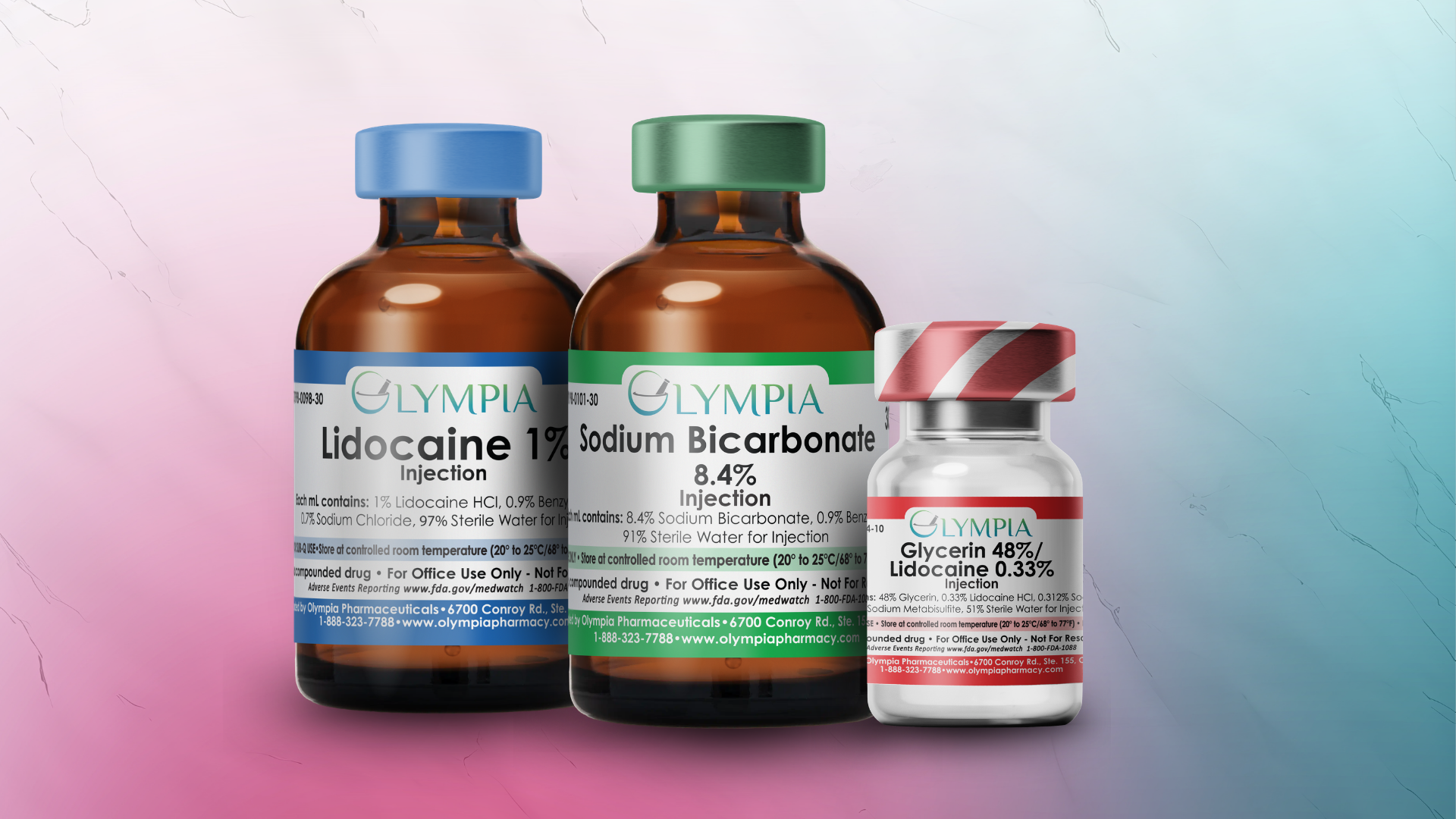
- Vein Care + Comfort (Glicerina 48% / Lidocaína 0.33% Injection):
- Combines a hyperosmotic sclerosant with lidocaine in a single formulation.
- Glycerin promotes endothelial injury and vein closure, while lidocaine may help reduce injection-related discomfort.
- Particularly useful for providers treating small superficial veins and telangiectasias who prefer a glycerin-based sclerotherapy approach.
Procedural Support with Sodium Bicarbonate
Sodium bicarbonate is an alkalinizing agent commonly used in procedural medicine to adjust the pH of certain injectable solutions. In vein care practices, sodium bicarbonate is most frequently utilized as a component of buffered local anesthetic and tumescent anesthesia preparations used during procedures such as endovenous laser ablation (EVLA), radiofrequency ablation (RFA), and other vein interventions. By reducing the acidity of local anesthetic solutions, sodium bicarbonate may help improve patient comfort during administration.
Olympia Pharmaceuticals offers Sodium Bicarbonate 8.4% Injection for clinical use. Appropriate use should be based on the specific procedure, formulation requirements, and clinical judgment of the treating provider.
While not a primary treatment for venous disease, sodium bicarbonate may serve an important supportive role in vein care practices by facilitating the preparation of buffered anesthetic solutions used during venous procedures.
Laser Therapy: Non-Invasive Options and Skin Care
Laser therapy offers a non-invasive treatment option for selected vascular lesions and may be appropriate for patients who prefer to avoid injections or when laser treatment is clinically indicated. Transcutaneous vascular lasers, such as Nd:YAG and pulsed dye lasers, target hemoglobin within blood vessels, generating thermal energy that damages the vessel and promotes gradual clearance by the body.
Patient Selection and Skin Care
Laser therapy is commonly utilized for small superficial vessels, facial telangiectasias, and selected spider veins. Treatment success depends on vessel size, depth, location, skin type, and the specific laser technology being used. Careful patient selection is essential, particularly in individuals with darker skin tones, where the risk of pigmentary changes may be increased.
Proper pre- and post-treatment skin care can help optimize outcomes and minimize adverse effects. While Olympia Pharmaceuticals does not manufacture laser aftercare products, providers may recommend gentle, non-comedogenic moisturizers, broad-spectrum sunscreen, and other supportive skincare measures appropriate for the patient’s treatment plan. Patients should follow provider-specific post-procedure instructions, which commonly include minimizing sun exposure, avoiding excessive heat, and using gentle skincare products during the recovery period.
Emerging Technologies: Non-Thermal and Ultrasound Options
The field of vein care is evolving with new non-invasive technologies. Sonovein echotherapy, an FDA-approved ultrasound-based treatment, is being explored as minimally invasive alternatives for the treatment of selected patients with great saphenous vein insufficiency. Unlike thermal ablation procedures, these technologies use focused ultrasound energy to target the vein without requiring catheter placement or thermal injury to surrounding tissues.
While device-based therapies are distinct from pharmaceutical interventions, they represent an expanding category of treatment options within modern vein care. Early clinical studies have demonstrated encouraging vein closure rates and favorable patient outcomes in appropriately selected individuals.
For providers utilizing traditional sclerotherapy, endovenous ablation, or laser therapy, awareness of emerging technologies can support informed patient discussions and individualized treatment planning. Patients who are hesitant about needles, catheter-based procedures, or thermal therapies may benefit from learning about non-thermal treatment alternatives when clinically appropriate.
Despite ongoing innovation in device-based therapies, sclerosants and supportive injectable medications continue to play an important role in the management of spider veins, reticular veins, and adjunctive vein care procedures.
Managing Complications and Side Effects
While modern vein treatments are generally safe and well tolerated, all procedures carry potential risks and side effects, including bruising, hyperpigmentation, matting, ulceration, and, rarely, deep vein thrombosis or neurological events. Proper patient screening and technique are critical to minimizing risks.
Hyperpigmentation
Hyperpigmentation is a relatively common side effect following sclerotherapy and may be more likely to occur in larger treated veins or when post-treatment trapped blood develops. It typically resolves within 3–12 months but can be prolonged in some patients. Patients should be advised to practice sun protection, and providers may recommend additional management strategies when clinically appropriate. These can include dermatological creams that utilize ingredients such as hydroquinone, like Olympia’s Corrector cream.
Matting
Telangiectatic matting, characterized by the appearance of fine new superficial vessels in the treatment area, may occur following sclerotherapy. The exact mechanism remains incompletely understood but is thought to involve inflammatory and angiogenic responses
Ulceration and Tissue Injury
Skin ulceration and tissue injury are uncommon but recognized complications of sclerotherapy. These events are most often associated with inadvertent extravasation of the sclerosant into surrounding tissues or, more rarely, accidental intra-arterial injection. The risk may vary depending on the sclerosant used, concentration, injection volume, and treatment location. Patients may initially experience localized pain, blanching, discoloration, or inflammation at the treatment site. Proper vein visualization, careful injection technique, appropriate sclerosant selection, and prompt recognition of adverse events are essential to minimizing risk. Providers should educate patients on expected post-treatment findings and encourage prompt reporting of severe pain, progressive skin changes, or delayed wound healing.
Allergic Reactions
Although rare, allergic reactions to sclerosing agents can occur. Providers should obtain a thorough allergy history and maintain appropriate emergency medications and protocols for managing hypersensitivity reactions.
Rare Serious Adverse Events
Although uncommon, serious adverse events have been reported following sclerotherapy and other vein procedures. These may include deep vein thrombosis (DVT), superficial venous thrombosis with extension into the deep venous system, visual disturbances, migraine-like symptoms, transient neurological symptoms, and, in very rare cases, cerebrovascular events. The risk of these complications may be influenced by factors such as underlying thrombophilia, history of venous thromboembolism, treatment of larger veins, foam sclerosant use, and individual patient characteristics. Careful patient selection, thorough medical history review, adherence to established treatment protocols, and appropriate post-procedure monitoring are essential to minimizing risk. Patients should be instructed to seek immediate medical attention if they experience symptoms such as significant leg swelling, chest pain, shortness of breath, sudden visual changes, severe headache, weakness, numbness, or other neurological symptoms following treatment.
Conclusion: Building a Comprehensive Vein Care Practice
Cosmetic vein care is a continually evolving field that combines clinical expertise, patient education, thoughtful treatment selection, and access to quality pharmaceutical products. By utilizing evidence-based treatment modalities such as sclerotherapy, laser therapy, and other emerging technologies when clinically appropriate, providers can deliver individualized, patient-focused care while addressing both cosmetic and symptomatic concerns.
Olympia Pharmaceuticals offers a variety of products that may support vein care practices, including Glycerin Injection for small telangiectasias, Sodium Tetradecyl Sulfate 1.5% Injection for selected vein procedures, and lidocaine-based formulations that may be incorporated into provider-directed treatment protocols. Product selection should always be based on patient-specific factors, goals, and clinical judgment, whether that’s through topical numbing creams or dermatologic creams.
As advancements in vein care continue to emerge, staying informed about evolving technologies, treatment guidelines, and best practices can help providers optimize patient experiences and outcomes. Whether you are expanding your cosmetic vein services or refining existing treatment protocols, Olympia Pharmaceuticals is committed to supporting healthcare professionals with high-quality pharmaceutical solutions and knowledgeable clinical support.
This content is for educational purposes only and is not a substitute for advice from a licensed medical provider. All compounded formulations are prepared by Olympia Pharmaceuticals under cGMP guidelines and with oversight by national and state pharmacy boards. Always consult with a medical professional before beginning any new regimen or care plan.
Fuentes
- The 2023 Society for Vascular Surgery, American Venous Forum, and American Vein and Lymphatic Society clinical practice guidelines for the management of varicose veins of the lower extremities. Part II.
- Radiologic Management of Lower Extremity Venous Insufficiency. American College of Radiology.
- Sclerotherapy of lower limb veins: Indications, contraindications and treatment strategies to prevent complications. International Union of Phlebology.
- Spider Veins. StatPearls. National Center for Biotechnology Information.
- Sonovein Clinical Trial at Englewood Health.
- Varicose Vein Treatment Devices Market Size, Forecast, Companies. DelveInsight.