
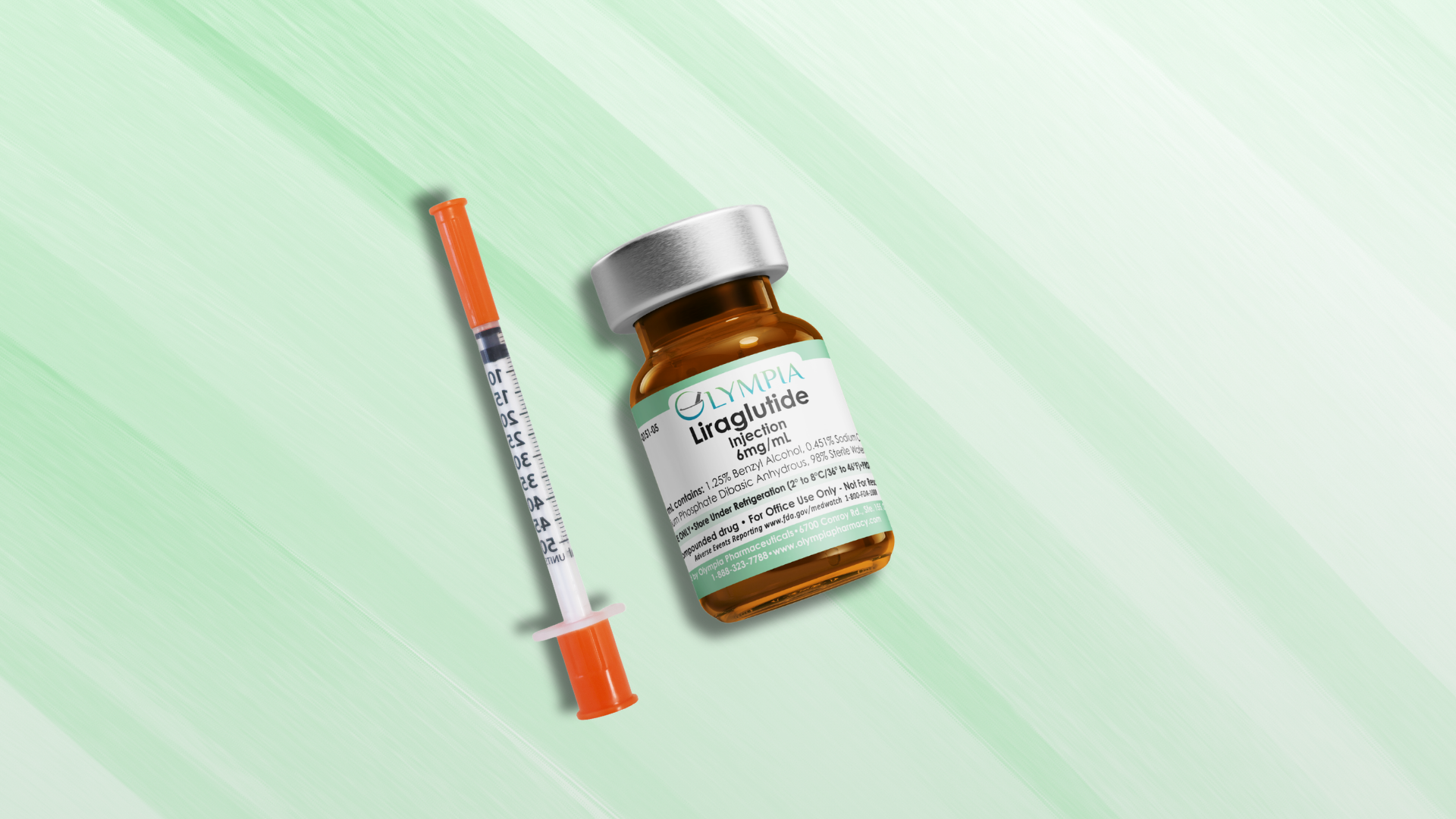
The liraglutide dosage chart below is built around a 6 mg/mL preparation and follows a common once-daily titration path that starts at 0.6 mg and moves up weekly to 3 mg. Liraglutide belongs to the GLP-1 receptor agonist class of drug, and current prescribing information for liraglutide products used in long-term weight management uses that 0.6 mg to 3 mg step-up schedule.
This article is educational and uses a 6 mg/mL example. The prescription label and prescriber instructions should always be the final checkpoint before any dose is measured.
Quick Liraglutide Dosage Chart (6 mg/mL)
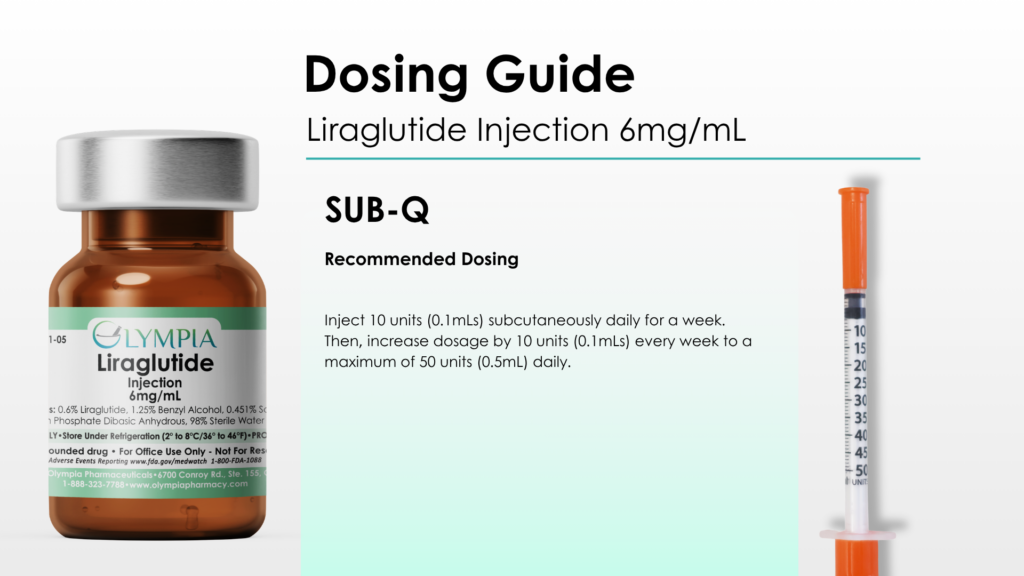
Because this preparation contains 6 mg in each mL, every 0.1 mL contains 0.6 mg. In a U-100 format, 1 mL lines up with 100 units, so the math converts into clean 10-unit steps.
| Week | Daily Dose | Volume | U-100 Units | Route |
| Week 1 | 0.6 mg | 0.1 mL | 10 units | SubQ |
| Week 2 | 1.2 mg | 0.2 mL | 20 units | SubQ |
| Week 3 | 1.8 mg | 0.3 mL | 30 units | SubQ |
| Week 4 | 2.4 mg | 0.4 mL | 40 units | SubQ |
| Week 5 and onward | 3.0 mg | 0.5 mL | 50 units | SubQ |
The weekly step-up matters because liraglutide is commonly started at the lowest daily dose and increased gradually. At 6 mg/mL, each 10-unit increase equals another 0.6 mg.
How to read mg, mL, and units
When a label says 0.6 mg, it’s describing the amount of drug. When a syringe shows 0.1 mL, it’s describing liquid volume. Units are simply the markings used to measure that volume on a U-100 syringe. That is why 0.3 mL lands at 30 units and 0.5 mL lands at 50 units in this chart. A different concentration changes the entire conversion, so double check the label every time before drawing up a dose.
Common weekly titration schedule
A common once-daily schedule starts at 0.6 mg for the first week, then moves to 1.2 mg, 1.8 mg, 2.4 mg, and 3 mg in weekly steps. In current liraglutide prescribing information used for long-term weight management, 3 mg daily is the ongoing step after titration.
For a 6 mg/mL preparation measured with a syringe, those same steps convert to 10, 20, 30, 40, and 50 units. Some people stay at a lower step longer based on prescriber direction, so the written instructions on the label should guide the timing. It’s important to stick by what your provider recommends.
How liraglutide is typically injected
Liraglutide is used subcutaneously once daily. Common injection areas include the abdomen, outer upper thighs, and backs of the upper arms. We’ve created a dedicated video tutorial on how to self-administer medications subcutaneously – to view for yourself, click here!
Current dosage also notes that it can be used at any time of day without regard to meals.
For readers using a compounded vial rather than a dial-a-dose pen, this is the section that usually matters most in day-to-day use. The route is SubQ, the schedule is once daily, and the exact volume depends on the concentration printed on the label.
What liraglutide may be prescribed for
Liraglutide sits in the GLP-1 receptor agonist class of medications. Current prescribing information describes liraglutide as a once-daily option that may be prescribed alongside reduced-calorie eating patterns and physical activity for long-term weight management in certain patients who meet the product criteria. Separate liraglutide products are also used in type 2 diabetes care, which is another reason it’s worth looking closely at the prescribed dose rather than assuming every liraglutide plan is the same.
Because GLP-1 plays a role in appetite and calorie intake, liraglutide belongs to a peptide conversation that is very different from peptides discussed for growth hormone signaling, recovery routines, or other goals.
Is liraglutide a peptide?
Yes, liraglutide is a peptide – more specifically, a linear peptide with 31 amino acids and an analog of GLP-1. That makes liraglutide part of the broader peptide category, but it fits in a different peptide lane than medications used for other protocol goals.
Liraglutide and sermorelin are different types of peptides
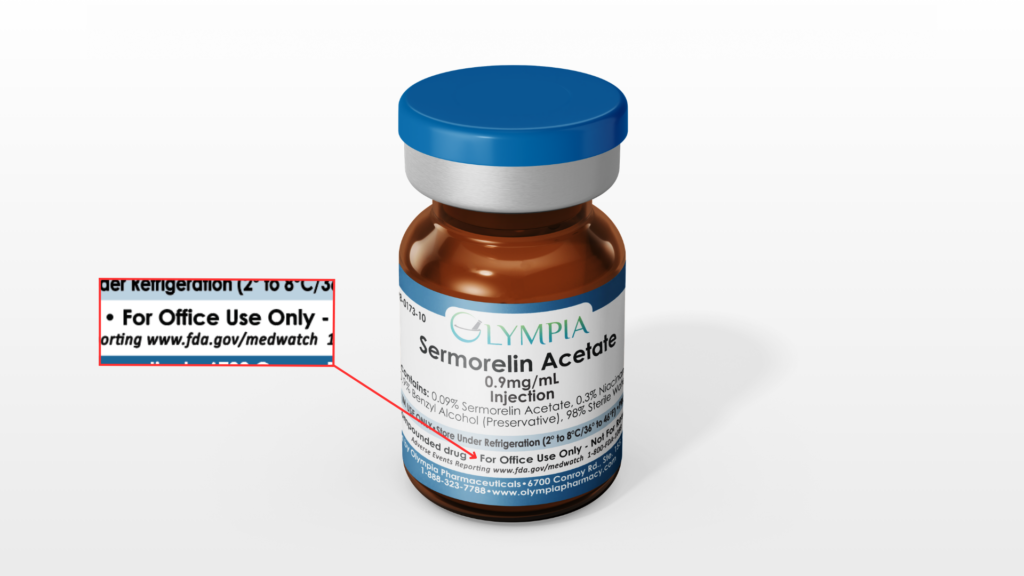
It’s easy to rope peptides into one blanket category – but every peptide serves a different purpose and function. Liraglutide and sermorelin peptide are both peptides, but serve different functions. Liraglutide is tied to GLP-1 signaling and appetite regulation, while sermorelin is built around protocols centered on growth hormone signaling, body composition, fitness routines, and sleep support. They fit under the same broad peptide umbrella, but are used for very different purposes.
That distinction matters because patients sometimes hear the word peptide and assume every peptide belongs in the same bucket. It doesn’t. The peptide name, the intended use, the route, and the dose all matter.
Possible side effects and precautions
Gastrointestinal issues are common with liraglutide, especially early in the dose-escalation process. Current prescribing information lists nausea, vomiting, diarrhea, constipation, and abdominal pain among the more common reactions.
Liraglutide is also not a match for every patient. People with a personal or family history of medullary thyroid carcinoma, Multiple Endocrine Neoplasia syndrome type 2, or a serious hypersensitivity reaction to liraglutide should review that history with the prescriber before use.
FAQ: Liraglutide dosage chart
How many units is 0.6 mg of liraglutide at 6 mg/mL?
At 6 mg/mL, 0.6 mg equals 0.1 mL, or 10 units on a U-100 syringe.
How many units is 1.2 mg of liraglutide at 6 mg/mL?
At 6 mg/mL, 1.2 mg equals 0.2 mL, or 20 units.
How many units is 1.8 mg of liraglutide at 6 mg/mL?
At 6 mg/mL, 1.8 mg equals 0.3 mL, or 30 units.
How many units is 2.4 mg of liraglutide at 6 mg/mL?
At 6 mg/mL, 2.4 mg equals 0.4 mL, or 40 units.
How many units is 3 mg of liraglutide at 6 mg/mL?
At 6 mg/mL, 3 mg equals 0.5 mL, or 50 units.
Is liraglutide the same as sermorelin?
No. Both are peptides, but liraglutide is tied to GLP-1 signaling, while sermorelin belongs to a different peptide conversation centered on growth hormone signaling and related protocol goals.
Is BPC-157 in the same category as liraglutide?
No. FDA specifically lists BPC-157 among bulk drug substances that raise compounding safety-risk concerns, so it should not be discussed as though it were interchangeable with liraglutide.
Final thoughts
A strong liraglutide dosage chart does more than list numbers. It shows how the dose steps up, how mg turns into mL and syringe units, and why knowing the exact compound matters. For a 6 mg/mL preparation, the math is straightforward: 10 units equals 0.6 mg, and each weekly step adds another 10 units until the 3 mg step is reached. If there is any uncertainty about the concentration, syringe type, or daily step, the prescription label and dispensing pharmacy should be the final checkpoint before the injection is measured.
This content is for educational purposes only and is not a substitute for advice from a licensed medical provider. All compounded formulations are prepared by Olympia Pharmaceuticals under cGMP guidelines and with oversight by national and state pharmacy boards. Clomiphene and enclomiphene require a valid prescription from a licensed healthcare provider. Always consult with a medical professional before beginning any new regimen or care plan.