

When it comes to compounding pharmacies, not all are created equal. After quality problems at some compounding pharmacies, the Food and Drug Administration (FDA) tightened oversight and split compounders into two designations: 503A and 503B. Here’s what each one does, how they differ, and why it matters for providers and patients.
What is a Compounding Pharmacy?
Compounding pharmacies aren’t exactly drug manufacturers, and they aren’t just drug distributors. They’re hybrid facilities that can do both. Traditionally, they prepare medications for patients whose needs couldn’t be met by commercially available drugs.
For example, a patient may be allergic to an inactive ingredient, such as a dye or preservative, in a commercially produced medication. A compounding pharmacy can prepare a version without that ingredient.
The role of compounding pharmacies has since expanded. During drug shortages, compounders can step in to reduce the impact on patients, ensuring continuity of care. Shortages now tend to last longer and affect more critical medications than before, which makes compounding pharmacies more important than ever.
Who Regulates Compounding Pharmacies?
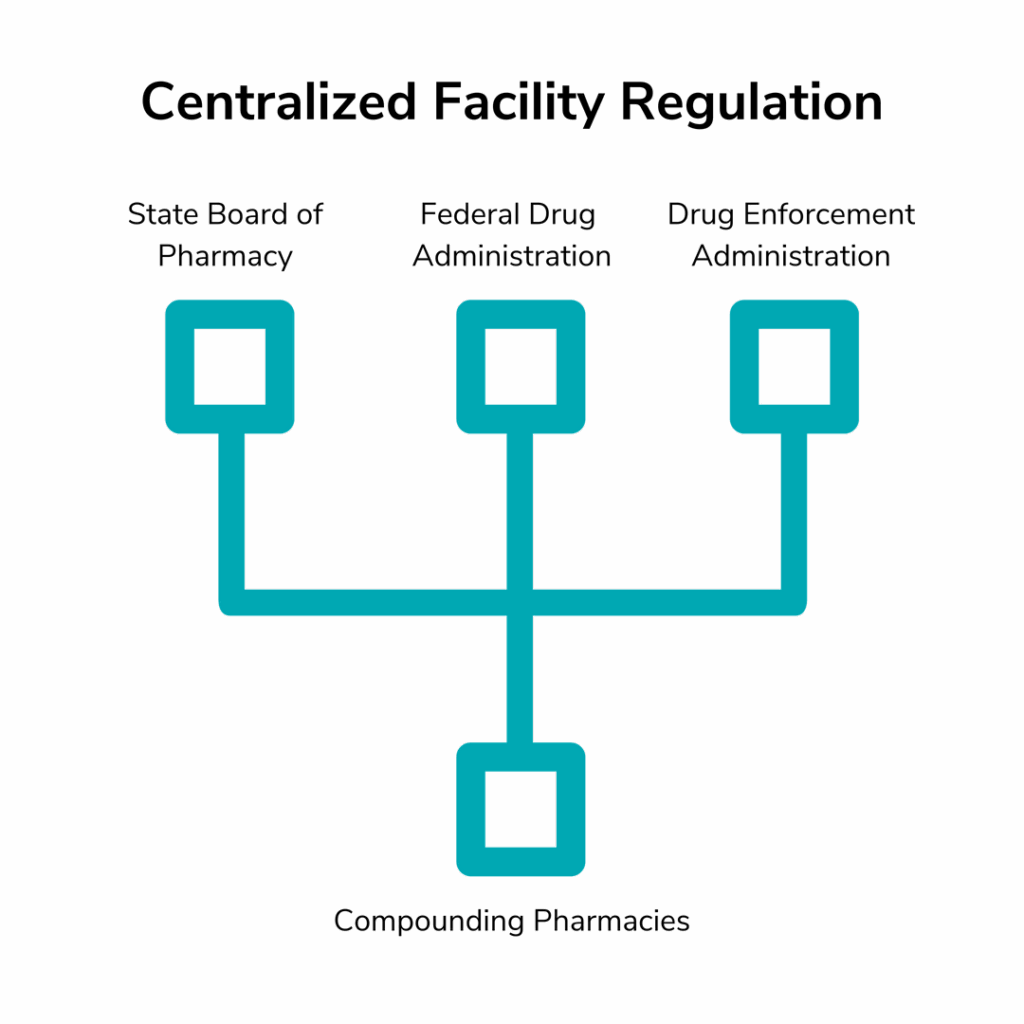
The FDA regulates drug manufacturers, and state governments regulate pharmacies. Because compounding pharmacies are both, three agencies oversee them:
- State Boards of Pharmacy inspect compounding pharmacies to make sure they follow each state’s pharmacy-practice rules.
- The FDA monitors the quality and integrity of the drugs, especially their active ingredients.
- The Drug Enforcement Administration (DEA) monitors the handling of controlled substances.
So while compounding pharmacies are sometimes seen as lightly regulated, they face more oversight than many traditional manufacturers and pharmacies.
What Is a 503A Compounding Pharmacy?
A 503A compounding pharmacy prepares medications for patient-specific prescriptions. These medications are produced in smaller batches and dispensed to individual patients.
503A pharmacies are regulated mainly by state Boards of Pharmacy and must comply with USP chapters 795 and 797. They aren’t permitted to compound large batches or distribute medications for office use. Their medications also typically have much shorter beyond-use dates (BUDs) than those made at a 503B.
Learn more about our 503A compounding pharmacy.
What Is a 503B Compounding Pharmacy?
A 503B compounding pharmacy, also called an FDA outsourcing facility, prepares medications at a large, manufacturing scale. It may still fill patient-specific prescriptions, but it can also produce large batches and sell them to healthcare facilities for office use.
503B facilities are held to higher manufacturing standards. They must fully comply with current good manufacturing practice (cGMP) regulations, the same rules followed by pharmaceutical manufacturers. Large-batch production also helps lower the per-unit cost of medications.
The Biggest Differences Between 503A and 503B
The biggest difference is that 503B facilities must have every process validated, while 503A facilities do not.
For a 503B, that means every batch must be tested before it’s released. This confirms each batch is consistent and meets FDA and cGMP standards. Testing methods, equipment and compounding rooms must also be validated for accuracy.
503A vs. 503B at a Glance
| Compounding standards and requirements | 503A | 503B |
| Compliant with U.S. Pharmacopeia chapters 795 and 797 | ✅ | ✅ |
| Compliant with state Boards of Pharmacy | ✅ | ✅ |
| Produces medications for office use in clinics, hospitals and surgery centers | ❌ | ✅ |
| Compliant with cGMPs in 21 CFR parts 210 and 211 | ❌ | ✅ |
| Sterile human medications not required to be patient-specific | ❌ | ✅ |
| Environmental monitoring every production shift in primary compounding areas (ISO 5) | ❌ | ✅ |
| Environmental monitoring every batch in secondary compounding areas (ISO 7 and 8) | ❌ | ✅ |
| Labeling regulated by the Drug Quality and Security Act (DQSA) | ❌ | ✅ |
| Independent quality assurance department required for product investigations | ❌ | ✅ |
| Stability testing required under time, temperature and humidity stress | ❌ | ✅ |
| Registered with the FDA as an outsourcing facility | ❌ | ✅ |
| Reports product list to the FDA twice a year | ❌ | ✅ |
| Extended beyond-use dates (BUDs) | ❌ | ✅ |
Both designations play important roles in healthcare, just at different levels. 503A pharmacies serve individual patients with customized prescriptions. 503B facilities follow stricter production standards and can produce at scale, supply offices and offer extended BUDs.

Beyond-Use Dates: Why Our 503B Products Last Longer
Many Olympia products carry extended beyond-use dates (BUDs), and that’s a direct result of the full stability studies required of every 503B facility.
What Is a Beyond-Use Date?
A BUD is the date after which a compounded medication should no longer be used. It marks how long the product is expected to keep its potency, stability and sterility when stored as labeled. For providers, a longer BUD means stock can sit on the shelf longer, with less waste and fewer reorders.
How 503A BUDs Are Set
503A pharmacies aren’t required to perform stability studies, so most assign BUDs using the default limits in USP chapters 795 and 797, along with published literature. Without product-specific stability data, those limits are conservative. For many sterile preparations, that means BUDs measured in days or weeks rather than months. Recent USP revisions tightened these limits further.
How 503B BUDs Are Set
503B outsourcing facilities are required to complete full stability studies on their products, a requirement 503A pharmacies don’t have. Those studies are what give our 503B products their BUDs: each product is tested over time to prove it stays potent, stable and sterile, and its BUD reflects what the data shows. The other 503B requirements covered earlier make sure every batch matches the product that was studied:
- Stability studies: Products are tested at set intervals and under stress conditions like temperature and humidity. The results determine each product’s BUD.
- Batch release testing: Every batch is tested for potency, sterility and endotoxins before it ships, so the dating applies to a verified product.
- Validated processes: Equipment, testing methods and compounding rooms are validated, so each batch is made the same way and performs the same way.
- cGMP manufacturing: Production follows the same current good manufacturing practices as pharmaceutical manufacturers, with environmental monitoring every shift and every batch.
- Independent quality assurance: A dedicated quality assurance team reviews data and investigates any deviation before product is released.
What This Means for Your Practice
Because our dating is backed by stability data, clinics can stock Olympia products for office use with confidence. Longer BUDs help reduce expired inventory, simplify ordering and keep medications on hand when patients need them.
Examples of Olympia 503B beyond-use dates:
- Methylcobalamin (B12), 10 mL vial: 365 days
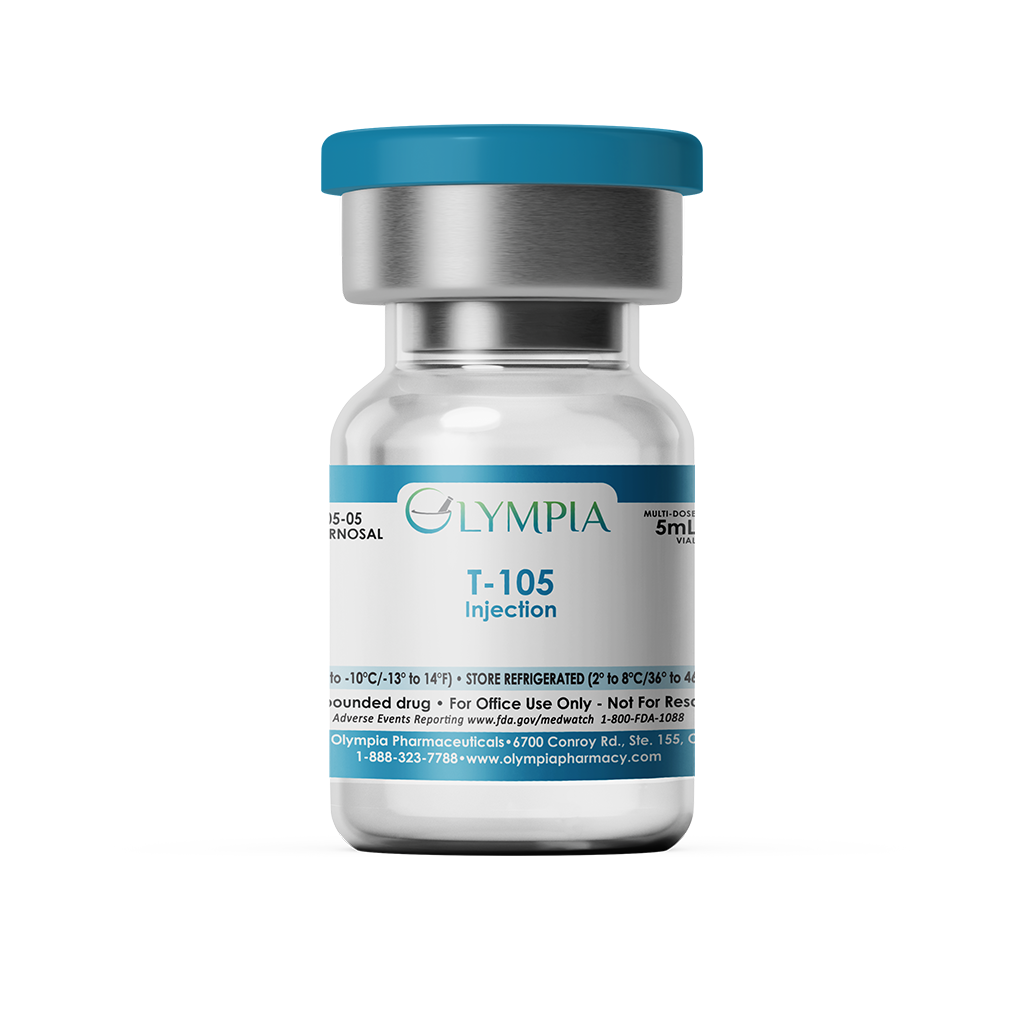
- TriMix (T-105): 360 days
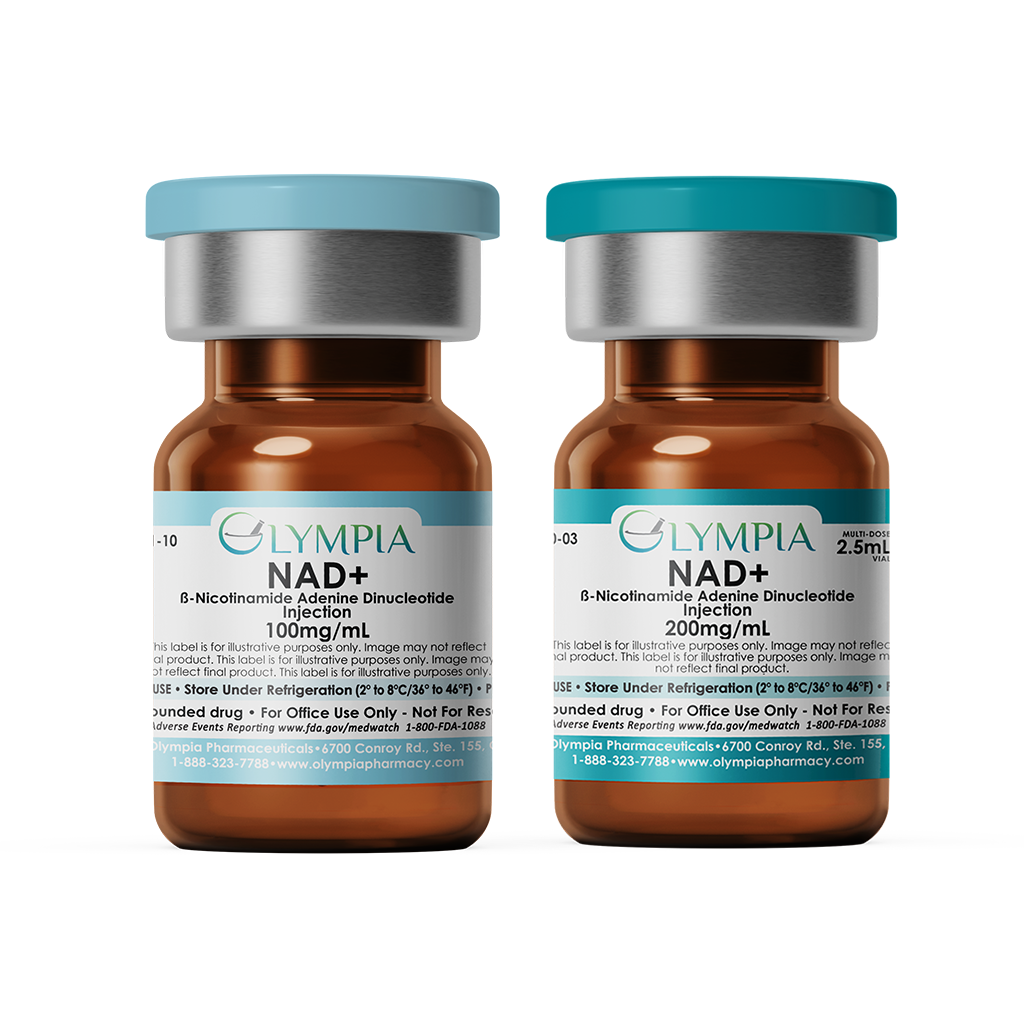
- NAD+ 100 mg/mL: 270 days
- Myers’ Cocktail: 180 days
BUDs vary by product, strength and vial size. Contact our team for dating on a specific products.

Major Benefits of 503B Pharmacies
- Quality assurance: 503B facilities operate under cGMP, the same standards as pharmaceutical manufacturers. Stricter FDA oversight means a better production environment and a higher-quality end product.
- Office use: 503B pharmacies are the only compounders permitted to produce medications for office use, including products administered in physician offices, clinics and hospitals.
- Extended beyond-use dates: Stability data supports longer BUDs, so clinics can keep stock on hand with less waste (see above).
- Nationwide reach: Because they aren’t limited to patient-specific prescriptions, 503B facilities can supply clinics and hospitals across the country.
- Greater efficiency: Large-batch production and centralized management encourage resource sharing and lower per-unit costs.
- Drug-shortage assistance: During a drug shortage, a 503B can help produce affected medications so patient care isn’t disrupted.
Work With Olympia’s 503A and 503B Facilities
Olympia Pharmaceuticals operates both a 503A compounding pharmacy and a 503B outsourcing facility, so providers can get patient-specific prescriptions and office-use medications from one partner. See why it can be beneficial to get medications like TriMix injections from a 503B like Olympia.