
Updated July 24, 2026: This article reflects the PCAC votes completed on July 23 & 24.
The FDA’s Pharmacy Compounding Advisory Committee, commonly called PCAC, has completed the first round of voting in its closely watched review of several peptide-related bulk drug substances.
On July 23 & 24 , 2026, committee members voted in favor of adding BPC-157, KPV, TB-500, MOTS-c, Semax, and Epitalon to the Section 503A Bulks List. The votes represent an important step forward for the substances, but they do not immediately change their regulatory status or make them available through 503A compounding pharmacies.
Here is what the committee decided, what the vote means, what still needs to happen, and how the current gray market fits into the conversation.
How Did PCAC Vote?
PCAC considered both the free-base and acetate forms of each substance. The committee’s reported vote totals were:
| Substance | Committee vote | PCAC recommendation |
| BPC-157 | 8–6, with 1 abstention | Include on the 503A Bulks List |
| KPV | 8–6, with 1 abstention | Include on the 503A Bulks List |
| TB-500 | 8–6, with 1 abstention | Include on the 503A Bulks List |
| MOTS-c | 7–5, with 2 abstentions | Include on the 503A Bulks List |
| Epitalon | 7-4, with 1 abstention | Include on the 503A Bulks List |
| Semax | 8-5, with 1 abstention | Include on the 503A Bulks List |
| Emideltide (DSIP) | 6-7, with 1 abstention | Rejected |
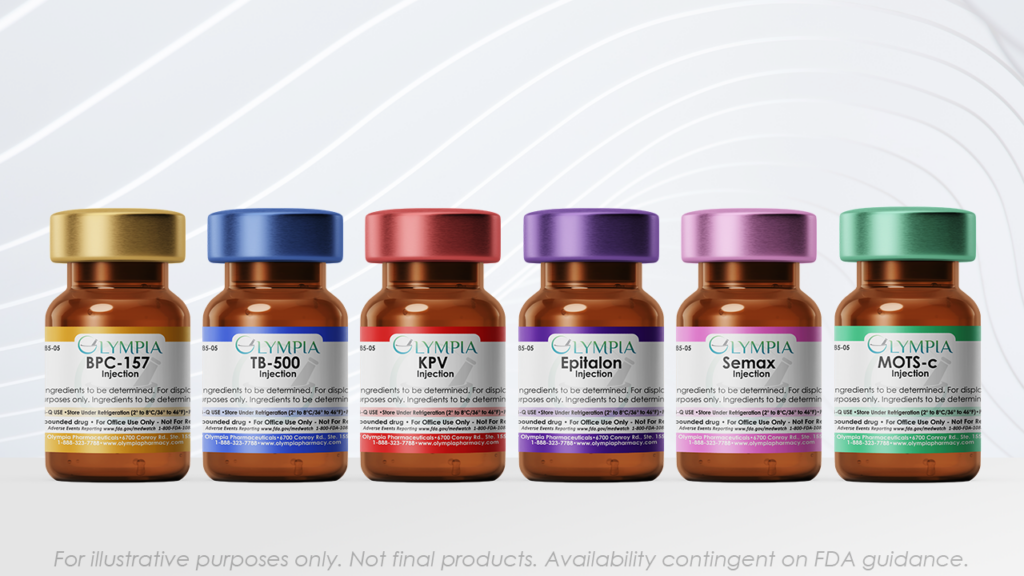
The committee voted on the free-base and acetate forms through separate questions, as outlined in the FDA’s official voting document. The reported totals show that a majority of participating committee members supported inclusion of the four substances.
The votes were notable because the FDA’s briefing materials proposed that each substance not be added to the list. Committee members reached a different recommendation after considering the FDA’s presentations, public comments, available research, historical use, and testimony from patients, providers, researchers, and members of the compounding industry.
However, the relatively close votes also show that the committee was divided. Questions remain about substance characterization, dosing, long-term safety information, human research, and the difference between anecdotal use and evidence gathered through larger studies.
What Does the PCAC Vote Actually Mean?
The vote is a recommendation to the FDA. It is not a final agency decision.
PCAC provides outside expert advice, but the FDA is not legally required to follow the committee’s recommendation. The FDA states that it will not make a final determination until it has considered the committee’s input and completed its remaining reviews.
This means the vote did not:
- Immediately add the substances to the 503A Bulks List
- Authorize pharmacies to begin compounding them based only on the committee vote
- Complete the FDA drug approval process
- Establish that products containing the substances have undergone FDA review for safety, quality, or benefit
- Create a pathway for 503B outsourcing facilities to produce the substances for office use
The scope of this meeting is specifically the Section 503A Bulks List. Section 503A generally applies to patient-specific compounding by state-licensed pharmacies or physicians under the conditions established by federal and state law.
If the FDA eventually adds one or more of these substances to the 503A Bulks List, qualifying pharmacies could potentially use them in patient-specific compounded medications when the remaining requirements of Section 503A are met. That would include requirements involving prescriptions, sourcing, certificates of analysis, labeling, and applicable state pharmacy rules.
It is also important to understand that adding a substance to the 503A Bulks List is not the same as completing the FDA drug approval process. Compounded medications do not go through the same premarket review as commercially manufactured drugs with approved applications.
What Happens Next?
The July 23 & 24 vote(s) is one part of a longer regulatory process.
1. The FDA will review the full meeting record
After the meeting, the FDA can consider:
- The committee’s recommendations
- Written comments submitted to the public docket
- Public testimony presented during the meeting
- FDA staff evaluations
- Substance characterization and sourcing concerns
- Available human, animal, and laboratory research
- Additional regulatory or safety information
The FDA’s July 2026 briefing document states that the final determination may also be affected by issues that were not discussed during the public meeting.
2. Formal agency action will still be required
FDA explains that it develops the 503A Bulks List through notice-and-comment rulemaking on a rolling basis. This can include a proposed rule, an opportunity for public comment, review of those comments, and a final rule.
The agency could also update an interim enforcement policy before final rulemaking, but no such change has been announced for these substances as of July 24.
Until the FDA publishes an official update, the current compounding rules remain in place.
3. There is no guaranteed decision date
The FDA has not announced a firm deadline for its final decision on BPC-157, KPV, TB-500, or MOTS-c. The next step could take weeks or months, depending on the form of agency action and whether additional public or regulatory review is required.
The FDA has also stated that it intends to consult PCAC before the end of February 2027 regarding GHK-Cu for noninjectable routes. That will be a separate review and should not be treated as an extension of the July votes.
The Timeline at a Glance
- July 23, 2026: PCAC votes in favor of including BPC-157, KPV, TB-500, and MOTS-c.
- July 24, 2026: PCAC votes in favor of Epitalon, and Semax. Denies Emideltide.
- After the meeting: FDA reviews the votes, meeting record, public comments, and internal evaluations.
- Future date not yet announced: FDA may publish an interim policy update, proposed rule, final rule, or another formal decision.
- Before the end of February 2027: FDA expects another PCAC consultation involving GHK-Cu for noninjectable routes.
How the Gray Market Entered the Peptide Conversation
Interest in peptides did not disappear while access through licensed compounding pharmacies was restricted. Instead, some consumers turned to online vendors, overseas suppliers, and companies selling peptide vials under labels such as “research use only” or “not for human consumption.”
This is commonly described as the peptide gray market.
Gray-market sellers may operate outside the usual relationship between a patient, a licensed prescriber, and a licensed pharmacy. Depending on the seller, purchasers may have limited information about where a substance was manufactured, whether the vial contains the stated ingredient and strength, how it was handled, or whether an injectable product was prepared under appropriate sterile conditions.
The phrase “research use only” also does not automatically remove a product from FDA oversight when a company’s website, instructions, product combinations, or marketing indicate that the substance is intended for human use.
In a March 2026 warning letter to an online peptide seller, the FDA cited products promoted as being for research only while also being marketed with human health claims and sold alongside bacteriostatic water. The agency emphasized that injectable products can carry additional risks because they bypass several of the body’s natural defenses against microorganisms and contaminants.
Could the PCAC Vote Reduce Gray-Market Purchasing?
Supporters of adding these substances to the 503A Bulks List argue that a lawful prescription pathway could move some consumers away from online research vendors and toward licensed providers and pharmacies.
Under a 503A pathway, bulk drug substances must meet sourcing and documentation requirements. According to the FDA’s 503A compounding information, bulk substances must be accompanied by a valid certificate of analysis and manufactured by an establishment registered with the FDA under Section 510 of the Federal Food, Drug, and Cosmetic Act.
What Patients and Providers Should Watch For
Patients and healthcare providers should look for an official FDA announcement rather than relying on social media posts stating that the peptides have been “approved” or “legalized.”
The most important updates will appear through:
- The FDA’s official 503A Bulks List
- FDA interim compounding policy documents
- Federal Register notices and rules
- Updates to the July 23–24 PCAC meeting page
- Future FDA statements regarding implementation and timing
Patients should also be cautious of sellers using the PCAC vote to market products immediately. A recommendation from an advisory committee is not permission for an online vendor to sell a substance for human use.
Food For Thought
The July 23 PCAC vote represents meaningful movement in the federal review of BPC-157, KPV, TB-500, and MOTS-c. A majority of committee members supported placing the substances on the 503A Bulks List, despite the FDA staff’s initial proposals against inclusion.
The decision is still advisory. The substances have not been formally added to the 503A Bulks List, and the vote does not announce immediate product availability.
The next phase belongs to the FDA. Until the agency issues an official decision or policy change, patients and providers should continue to distinguish between a committee recommendation, lawful prescription compounding, and products sold through the gray market.
Olympia Pharmaceuticals will continue monitoring the FDA’s review and provide updates as additional votes and regulatory decisions become available.
This article is provided for educational purposes and does not constitute medical or legal advice. The discussion of a substance does not announce its availability or recommend its use.